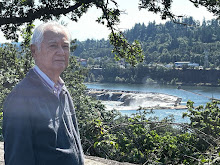
David B. Katague is an online memoirist and cultural essayist whose writing has appeared on HubPages

Friday, October 30, 2015

Chapter 8: The Ancestral Roots of the Nieva Clan of Marinduque-The Magnificent Six

Continuation of Series authored by Rene Nieva
THE MAGNIFICENT SIX NIEVAS OF GENERATION I: The Founding Father of the Nieva Clan of Marinduque -- from whom all the subsequent Nieva descendants to the present all came from whether surnamed Nieva or not -- was Calixto Nieva. Calixto
was Cabeza or Governadorcillo of Boac in 1867. He came from a line of Gobernadorcillos himself.

Calixto's wife was Epifania, also known as Capitana Maning. She was known for her mestiza beauty, being the daughter of a parish priest of Boac of Spanish-French descent. Thus, the good looks of most if not all of the subsequent Nievas likely came mainly from Epifania or the Morente side. Nonetheless, Calixto had a certain roguish handsomeness himself as may be seen from the attached photo.

Epifania must have not been just a pretty face but must have served as a supportive partner to Calixto. The leadership qualities of the Morentes seemed to have manifested themselves in her siblings, one of whom, Juan or Juancho, became governor of Mindoro, as well as subsequent generations of Morentes that have produced National Artist Lucrecia Kasilag, DOTC Undersecretary Josie Trinidad-Lichauco and an assortment of business and professional leaders.

Calixto and Epifania had six children, whom we can dub as belonging to Generation 1. They compose the six branches of original Nievas from whom the generations following can connect themselves even if they no longer carry the Nieva surname through their marriages. The six are, in the order of birth, Juan, Victoria, Dionisio, Gregorio, Jose and Rosita, who were all of course surnamed Nievas. I would like to refer to them as the Magnificent Six, for they all were extraordinary and impressive men and women who have made indelible marks not only in the history of Marinduque but that of the nation as a whole.

The first and oldest child was Juan, born in 1860, a contemporary of Jose Rizal who was his schoolmate (he called him Pepe) at the Liceo de Manila, forerunner of the Ateneo. He was a good friend of Manuel Luis Quezon, who was his provincemate (Tayabas and Marinduque were then one province). Juan even made Quezon godfather to his first-born son Guillermo (Willie).

Juan became Cabeza de Barangay of Boac and Sta. Cruz and lieutenant governor or "sub-governor" of the then sub-province (of Tayabas) of Marinduque from 1907 to 1916. He was credited for the planting of coconut trees throughout Marinduque and connecting all the towns through telegraphic lines.

From Juan descended not just the Nievas but also the Jambaloses, the Carrions, the Luarcas, the Senos, the Sto. Domingos and the Ocampos of Generation 2 and other surnames in succeeding generations.

Victoria was the political right-hand woman of Juan. Even if she was lame (from falling from a calesa) she was an astute and dynamic politician and was said to be the "king-maker" behind the political successes of Juan and other political leaders of Marinduque at the time.

Victoria (no photo available) was also active in civic and charitable affairs, putting up and becoming the first president of the Boac Puericulture Center which looked after the health of mothers and their babies. Victoria married Doroteo Mercader and from her and her husband came the Reyeses, the Sto. Domingos and the Laurels of Generation 2 and 3 and again other surnames in succeeding generations.

(Next, the rest of the Magnificent Six -- Dionisio, Gregorio, Jose and Rosita.)

Thursday, October 29, 2015

11. Places in the US that Macrine and I had Visited-San Luis Obispo, California and the Hearst Castle


Macrine and I had been to the Hearst Castle in San Simeon twice in the late 1970's. There are five tours one can take, but if it is your first time, Tour #1 is highly recommended by the National State Park officials. It is about 41 miles from San Luis Obispo, where most tourist stay overnight to return the next day for another tour.
The Garden

Hearst Castle is a National Historic Landmark mansion located on the Central Coast of California, United States. It was designed by architect Julia Morgan between 1919 and 1947 for newspaper magnate William Randolph Hearst, who died in 1951. In 1957, the Hearst Corporation donated the property to the state of California. Since that time it has been maintained as a state historic park where the estate, and its considerable collection of art and antiques, is open for public tours. Despite its location far from any urban center, the site attracts roughly one million visitors per year.


Hearst formally named the estate "La Cuesta Encantada" ("The Enchanted Hill"), but usually called it "the ranch". The castle and grounds are also sometimes referred to as "San Simeon" without distinguishing between the Hearst property and the adjacent unincorporated area of the same name. The history of this castle is fascinating and interesting. For details read the Wikipedia.
The Pool-edged with Gold

Now for information about San Luis Opispo, just recently listed as one of the top ten and best cities to live in the United States.

San Luis Obispo (pronounced /sæn ˈluːɪs ɵˈbɪspoʊ/; Spanish for St. Louis, the Bishop) is a city in California, located midway between San Francisco and Los Angeles on the Central Coast. Founded in 1772, San Luis Obispo is one of California’s oldest communities. The city, referred to locally as "SLO", "SLOtown", "S.L.O" and "San Luis", is the county seat of San Luis Obispo County and is home to the California Polytechnic State University (Cal Poly).

One of Macrine's nephew graduated from Cal Poly in the late 1980's. This Fall, my granddaughter Marina Katague entered as a Freshman at Cal Poly.

The City in 1876
Earliest human inhabitants of the local area were the Chumash peoples, who settled in the vicinity circa 5,000 to 10,000 years BC. One of the earliest villages lies south of San Luis Obispo, and reflects the landscape of the early Holocene when estuaries came farther inland and sea levels were higher. These Chumash people exploited marine resources of the inlets and bays along the Central Coast and inhabited a network of villages including sites at Los Osos and Morro Creek.

San Luis Obispo once had a burgeoning Chinatown in the vicinity of Palm St. and Chorro St. Laborers were brought from China by Ah Louis in order to construct the Pacific Coast Railway, roads connecting San Luis Obispo to Paso Robles and Paso Robles to Cambria, and also the 1884 to 1894 tunneling through Cuesta Ridge for the Southern Pacific Railroad. SLO's Chinatown revolved around Ah Louis Store and other Palm Street businesses owned and run by Chinese business people. Today, Mee Heng Low chop suey shop is all that remains of the culture, although a revitalized Chinatown development is being planned. A display of some of the unearthed relics from this period can be seen on the first floor of the Palm Street parking garage, which was built over the location where Chinatown once stood. The San Luis Obispo Historical Society (adjacent to the Mission) also contains rotating historical exhibits.

Among San Luis Obispo's historical buildings is the former San Luis Obispo Carnegie Library, located at 696 Monterey Street. The San Luis Obispo Carnegie Library was built in 1905 with a grant of $10,000 from Andrew Carnegie, who funded the establishment of 142 California libraries in the early 1900s. The Romanesque style building was designed by architect W.H.Weeks of Watsonville, California and was built by contractor Joseph Maino of San Luis Obispo. As one of numerous California public buildings designed by W. H. Weeks, it shares features with Carnegie libraries in nearby Lompoc and Paso Robles.

The San Luis Obispo Carnegie building served as the city library until 1955, when a new public library was built at the corner of Palm and Morro Streets. It has been home to the San Luis Obispo County Historical Museum since 1956. The Carnegie Library building is listed on the National Register of Historic Places.


Note: This is no. 11 of 30 ( Part 1) articles on places that the Katague family had visited or resided in the US since 1960.

Monday, October 26, 2015

10. Places in the US that Macrine and I had Visited-Los Angeles, California and Surrounding Areas

Macrine and I at the Huntington Beach Pier, 2010

We have been to the Los Angeles area more than a dozen times since 1960. Like New York, my personal opinion is that it is a nice place to visit, but even if you gave me a million dollars, I will never live in the area. Why? the Smog, the overcrowded freeways and just too many people. But as far as tourist attractions, the area is one of the best in US with Disneyland, Catalina Island and the surrounding beaches such as Huntington Beach, Santa Monica and of course Hollywood and Beverly Hills.

Even in the most remote corners of the world, the name Los Angeles is known. As one of the most popular cities in this country, LA draws millions of tourists every year, catering to the unique desires of each one with unparalleled diversity and countless entertainment options. There truly is something for everyone around this city.

Take a tour through the world of the rich and famous in Beverly Hills, find the classic California surfing lifestyle at Huntington Beach, or follow the White Rabbit down the rabbit hole into the funky and eclectic world of Venice Beach. Appease your inner child by visiting attractions like Disneyland and Magic Mountain, or summon your inner performer by visiting Universal Studios and the Hollywood Walk of Fame. While picking the right destination for activities may be difficult, one sure thing is that there will never be a lack of options. Los Angeles is almost synonymous to Disneyland in Anaheim. We have visited Disneyland three times since 1960. It is a must see for both adults and children of all ages. Here are two short videos for your enjoyment.


Here are a few suggested tours besides Disneyland for you to consider if you happened to be in the LA area.

Newport Landing Whale Watching
1. One of the most unique ways to spend any day is by taking to the sea to watch whales and dolphins in their sparkling natural habitat. Newport Landing offers multiple whale watching tours departing daily, year-round, from Newport Beach, and individuals, groups and school classes are welcome to enjoy this breathtaking experience. Gray whales, giant blue whales (the largest animal on the planet), finback whales, and several other species of whales, 6 different species of dolphin, sea lions, and more are all viewable from their large specially made for whale watching ship.

2. Escapes Sightseeing and Food Tours
See famous sites in Hollywood and dine at the hottest restaurants. All this can now be accomplished with TOURific Escapes' Hollywood Sites & Bites Tour. The four-hour tour kicks off at iconic landmarks around Hollywood. Experience major attractions like the famous Hollywood Sign, Hollywood Roosevelt Hotel, Grauman's Chinese Theatre and the site of the Academy Awards. Next up is a trip down Hollywood Boulevard, swinging by trendy Melrose and down The Sunset Strip, probably LA’s most famous attraction. Along the way, you’ll dine at some of LA’s best restaurants. Some are hidden gems known only to Foodies and locals. Don’t miss this TOURific adventure.

Another Side of Los Angeles Tours
3.Whether you're visiting Los Angeles or you're a local, Another Side of Los Angeles Tours is a great way to see all the sites that LA has to offer and in a very unique way. This LA tour provider is famous for their Segway Tours covering the best spots around LA including Beverly Hills--probably the most popular tour--and Another Side of Los Angeles Tours also offers studio tours, golfing tours, shopping and LA spa tours along with general sightseeing tours. For the ultimate Los Angeles experience, try the Ultimate Hollywood Tour which cruises through Beverly Hills, Rodeo Drive, the Farmers Market, swings by Hollywood Mann's Chinese Theatre, takes a stroll on the Walk of Fame, rolls down Sunset Strip, drives through the Avenue of the Stars, and checks out amazing Hollywood homes.

Cruise Newport Beach
4. Whether visiting Los Angeles or living there, a cruise exploring the beautiful waters of Southern California is a treat for anyone. Cruise Newport Beach offers affordable sunset cruises and brunch cruises, as well as evening cruises and Latin themed cruises complete with margaritas and live Latin music. This Los Angeles cruise company also offers ship rentals for events like bachelor parties, company parties or holiday gatherings.

Go Los Angeles Card
5.The Go Los Angeles Card offers free general admission to over 35 Los Angeles attractions, including Universal Studios Hollywood, the Los Angeles Zoo, California Science Center, Los Angeles City Tour, LEGOLAND California, and the Hollywood Wax Museum.

Note: This is No.10 ( Part 1) of a series of articles on places that the Katague family have either resided or visited in the US.

Friday, October 23, 2015

9. Places in the US that Macrine and I had Visited-Las Vegas, Nevada and Surrounding Areas


Macrine and I in front of the Mirage Hotel and Casino during a Volcanic Eruption,2009

Las Vegas is our family favorite city for relaxation. Macrine and I have been to Las Vegas more than a dozen times since 1960. Our first trip to LV was in the late 1980's, when I attended an American Chemical Society Meeting. Since then we have visited the city 10 times and our latest visit was four years ago.

As members of International Interval (II) Time Exchange Program, Las Vegas is the easiest city to exchange any time of the year. Exchanging our vacation resort (our home resort is The Ridge at Tahoe) via II to other cities such as Hawaii or San Francisco is almost impossible. We waited for three years to get an exchange in Maui, two years in San Francisco and finally give up waiting for a vacancy in Paris, France. So if you have not been to Las Vegas, here are two tour videos of the sights and sounds of Las Vegas and surrounding areas.


The last time we visited Las Vegas( stayed at Polo Towers) we spent one day with a tour of the nearby three national parks in Utah. Details of this tour will be described in my series of articles about the National Parks that we have visited.

Note: This is No 9 (Part 1) of a series of articles on places that we have visited or have resided in the United States since 1960.

Tuesday, October 20, 2015

8. Places in the US that Macrine and I had Visited-South Lake Tahoe, California/Nevada and Vicinity


South Lake Tahoe, California

Three years ago about this time of the year Macrine, David III and I spent one week of vacation at our time vacation resort at the 5 star The Ridge Resort, Tahoe in the Nevada side of Lake Tahoe. David III played golf everyday and also poker at the three Casinos, Harvey, Harrah and the Horizon. Macrine and I played the slots machine and also went to a lake cruise and dinner. This is our yearly vacation through a time-share program that we purchased in the early 1990's.

A detail description of our time-sharing experience is also described in this blog. Use the search gadget in this blog for the article, if you want to know more about time-sharing vacation packages from The Ridge, Tahoe.

Enjoying the amenities and scenery at the Ridge, Winter Time

Personal Note: Casino Gambling in Lake Tahoe is on the decline due to competition from Indian Casinos in Northern California, such as Thunder Valley, The Red Hawk, Cache Creek and other Casinos in Northern California.

SOUTH LAKE TAHOE, CALIFORNIA

South Lake Tahoe is a city in El Dorado County, California, in the Sierra Nevada Mountains. The population was 23,609 at the 2000 census. The east end of the city, on the California-Nevada state line, is mainly geared towards tourism, with T-shirt shops, restaurants, hotels, and Heavenly Mountain Resort with the Nevada casinos just across the state line in Stateline, Nevada.

The city extends about five miles (8 km) west-southwest along U.S. Route 50, also known as Lake Tahoe Blvd. The western end of town is mainly residential, and clusters around "The Y" (new intersection October 2008), the X-shaped intersection of US 50, State Route 89, and the continuation of Lake Tahoe Boulevard after it loses its Federal highway designation.

According to the United States Census Bureau, the city has a total area of 16.5 square miles (42.7 km²), of which, 10.1 square miles (26.1 km²) of it is land and 6.4 square miles (16.7 km²) of it (39.03%) is water. Its elevation is about 6,260 feet (1,910 m).

History

The city incorporated in 1965 by combining the previously unincorporated communities of Al Tahoe, Bijou, Bijou Park, Stateline, Tahoe Valley, and Tallac Village. A post office was established in 1967. In 1991, Jaycee Lee Dugard was abducted from a bus-stop in South Lake Tahoe, aged 11. She was found in 2009 in Antioch, California 18 years later.

LAKE TAHOE

View of Lake Tahoe from the California South Side

Lake Tahoe is a large freshwater lake in the Sierra Nevada mountains of the United States. At a surface elevation of 6,225 ft (1,897 m), it is located along the border between California and Nevada, west of Carson City, Nevada. Lake Tahoe is the largest alpine lake in North America. Its depth is 1,645 feet (501 metres) making it America's second-deepest (the deepest is Crater Lake in Oregon, being 300 ft deeper, at 1,945 feet (594 m) deep).

The lake was formed about 2 million years ago and is a part of the Lake Tahoe Basin with the modern lake being shaped during the ice ages. It is known for the clarity of its water and the panorama of surrounding mountains on all sides. The area surrounding the lake is also referred to as Lake Tahoe, or simply Tahoe.

Lake Tahoe is a major tourist attraction in both California and Nevada. It is home to a number of ski resorts, summer outdoor recreation, and tourist attractions. Snow and skiing are a significant part of the area's economy and reputation. Mountain and lake scenery are attractions throughout the year. The Nevada side also includes large casinos. Highways provide year-round access from Reno, Carson City, Virginia City and Sacramento.

Lake Tahoe is the second deepest lake in the U.S., with a maximum depth of 1,645 feet (501 m), trailing only Oregon's Crater Lake at 1,949 ft (594 m). Tahoe is also the 16th deepest lake in the world, and the fifth deepest in average depth. It is about 22 mi (35 km) long and 12 mi (19 km) wide and has 72 mi (116 km) of shoreline and a surface area of 191 square miles (490 km2). Washoe Indians used the lake.

Approximately 2/3 of the shoreline is in California. The south shore is dominated by the lake's largest city, South Lake Tahoe, California, which adjoins the town of Stateline, Nevada, while Tahoe City, California, is located on the lake's northwest shore. Although highways run within sight of the lake shore for much of Tahoe's perimeter, many important parts of the shoreline now lie within state parks or are protected by the United States Forest Service. The Lake Tahoe Watershed (USGS Huc 18100200) of 505 sq mi (1,310 km2) includes the land area that drains to the lake and the Lake Tahoe drainage divide traverses the same general area as the Tahoe Rim Trail.

Lake Tahoe as viewed from Heavenly Valley Ski Resort during the Winter Season

This article is No.8 ( Part 1) of a series of articles that the David B. Katague family has either resided or visited in the United States. If you are somewhere in Northern California, this is a must place to visit and maybe spent some of your vacation money in the Casinos, enjoy a leisurely cruise on the lake ( summer time) or if your visit is on winter time, visit the ski resort of Heavenly Valley at 9000 ft elevation with a panoramic view of the lake.

Saturday, October 17, 2015

7. Places in the US that Macrine and I had Resided/Visited-Modesto, California

The Modesto Arch

We resided in Modesto from 1969 to 1974. I was employed by Shell Development Company as an Analytical Research Chemist in Research Department of their Agricultural Division. We resided at the northern suburb of Modesto- a typical middle-income housing development in the early 1970's. Compared to Kansas City, Missouri, Modesto is a very small town at that time, although there was a private Country and Tennis Club, Sportmen Club of Stanislaus County known as SOS, that we enjoyed very much. We played tennis, eat at the country club restaurant and play party bridge at night. The kids enjoyed swimming during the day and we made a few good friends at the club.
Bridge Nights at Sportmen Club of Stanislaus County(SOS)

The highlights of our stay was when we met The Gallos during a tennis tournament. The Gallos were already millioners at that time since they owned the Gallo Winery, but were friendly to most of the members of the Club. The other highlight was that we became US citizens in Modesto. Our citizenship party was featured in the society column of the Modesto Bee, the local newspaper.
Central Valley Farm Land
The Modesto Metropolitan Area is a part of the Central Valley of California. The Central Valley (also known as The Valley) is a large, flat valley that dominates the central portion of the U.S., State of California. It is home to many of California's most productive agricultural efforts. The valley stretches approximately 450 miles (720 km) from northwest to southeast inland and parallel to the Pacific Ocean coast.

Its northern half is referred to as the Sacramento Valley, and its southern half as the San Joaquin Valley. The Sacramento valley receives about 20 inches of rain annually, but the San Joaquin is very dry, often semi-arid desert in many places. The two halves meet at the huge Sacramento-San Joaquin River Delta of the Sacramento and San Joaquin Rivers, a large expanse of interconnected canals, stream beds, sloughs, marshes and peat islands. The Central Valley encompasses around 42,000 square miles (110,000 km2), making it roughly the same size as the state of Tennessee. The Central Valley is the bread basket of the State producing fresh fruits, meat products, vegetables( fresh and canned) and rice and grains and other agricultural products. It is the most fertile agricultural region of the Pacific.

Counties commonly associated with the valley:

* North Sacramento Valley (Shasta, Tehama, Glenn, Butte, Colusa)
* Sacramento Metro (Sacramento, El Dorado, Sutter, Yuba, Yolo, Placer)
* North San Joaquin (San Joaquin, Stanislaus, Merced)
* South San Joaquin (Madera, Fresno, Kings, Tulare, Kern)

About 6.5 million people live in the Central Valley today, and it is the fastest growing region in California. There are 10 Metropolitan Statistical Areas (MSA) in the Central Valley. Below, they are listed by (MSA) population. The largest city is Fresno, followed by the state capital Sacramento, but the Sacramento area is the most populous region.

* Sacramento Metropolitan Area (2,136,604)
* Fresno Metropolitan Area (1,002,284)
* Bakersfield Metropolitan Area (827,173)
* Stockton Metropolitan Area (664,116)
* Modesto Metropolitan (505,505)
* Visalia Metropolitan Area (410,874)
* Merced Metropolitan Area (241,706)
* Chico Metropolitan Area (214,185)
* Redding Metropolitan Area (179,904)
* Yuba City Metropolitan Area (165,081)

Modesto is the county seat of Stanislaus County, California. With a population of approximately 211,156 as of April 2009, Modesto ranks as the 17th largest city in the state of California. Modesto is located in Northern California, 92 miles east of San Francisco, 68 miles south of the state capital of Sacramento and 66 miles west of Yosemite National Park. Modesto, a 29-time Tree City USA honoree, is surrounded by rich farmland, lending to a ranking for the county as 6th among all California counties in farm production. Led by milk, almonds, chickens, cattle, and walnuts, the county grossed nearly $2.5 billion in agricultural production in 2007.
The Gallo Art Center
Locally, Modesto is home to the critically acclaimed Gallo Center for the Arts, Prospect Theater Project, the Modesto Nuts (a Colorado Rockies MLB affiliate) and the Amgen Tour of California, which in 2009 saw cycling legend Lance Armstrong cross the finish line. The Xclamation Festival, X-Fest, has become the city’s largest entertainment and cultural gathering, recently celebrating its 10th year. The event in 2009 had an estimated 16,000 attendees enjoy music and food on the streets of downtown Modesto. Modesto also encompasses various cultural and social diverse schools, especially Modesto High School. MHS, being the oldest school of Modesto, embodies a rigorous academic and physical curriculum for students such as the International Baccalaureate program, AVID, and more.

In February 2010, the Gallup-Healthways Well-Being Index, which interviewed more than 353,000 participants and asked individuals to assess their jobs, finances, physical health, emotional state of mind and communities, ranked Modesto 161 out of the 162 cities surveyed. In December 2009, Forbes ranked Modesto 48th out of 100 among "Best Bang-for-the-Buck Cities;" according to Forbes. In this ranking, Modesto ranked 8th in housing affordability and travel time but also ranked 86th in job forecast growth and 99th in foreclosures. In variety of other past rankings, Modesto has scored in the top ten worst places to live due to its high cost of living, high unemployment, long commutes and high crime rate.

Note: This is No.7 (Part 1) of a series of articles on places that we have resided or visited in US since 1960 to the present.

Wednesday, October 14, 2015

6. Places in the US that Macrine and I had Resided/Visited-Pinole, California and Vicinity

The East Bay Satellite Map

We resided in the small city of Pinole from 1974 to 1990. Pinole is part of the area known as the inner East Bay. This is the town where all our children finished high school. Our oldest and youngest children obtained their Bachelor degrees at University of California in Berkeley. The other two obtained their Bachelor degrees at UC Davis and Sacramento State University. All of them went to Graduate or Law School after finishing their Bachelor Degrees. My oldest son went to Law School at UC Davis. My oldest daughter went to St Mary College for her Para Legal studies in Moraga. My youngest son took his Masters Degree at Carnegie Mellon University in Pittsburgh, Pennsylvania. My youngest daughter took her Masters degree at The University of Southern California in Los Angeles and Washington, D.C.
This was our first and last 2-story house (we prefer ranches or one story houses) in Ramona Street, Pinole in 1986.

I was employed first by Stauffer Chemical Company for 12 years and later by Chevron Chemical Company for 4 years in Richmond, California as an Analytical Chemist Research in the field of pesticides residues method development.
My Picture was Used by Stauffer Chemical for Press Relation Activities Locally and Nationally

Our Pinole years were wonderful and memorable since Macrine and I were fully involved with our local church charitable activities, University of the Philippines Alumni Association activities as well as with the activities of the Filipino-American community in the area.
Pinole and Surrounding Area

The East Bay is a part of the San Francisco Bay Area in California. Originally referring only to cities along the east side of the San Francisco and San Pablo bays, the conception of the East Bay has grown with the expansion of the Bay Area to include all of Alameda and Contra Costa counties. The East Bay contains an extremely wide range of people and communities, ranging from the older and poorer cities on the bay, through the wealthy suburbs along the I-680 corridor, all the way to the freshly built developments in the far east of the region. The region is linked primarily by highways, with the BART rail system also connecting the East Bay with San Francisco. Here's a video of Bart ride from East Bay to SFO under the TUBE.


History and Development

Although initial settlement interest focused on San Francisco due to its location controlling the Golden Gate strait and sea access to the bay, the coastal East Bay came to prominence in the middle of the nineteenth century as the part of the Bay Area most accessible by land from the east. The Transcontinental Railroad was completed in 1868 with its western terminus at the newly constructed Oakland Long Wharf, and the new city of Oakland rapidly developed into a significant seaport. Today the Port of Oakland is the Bay Area's largest port and the fifth largest container shipping port in the United States.

In 1868, the University of California was formed from the private College of California and a new campus was built in what would become Berkeley. The 1906 San Francisco Earthquake saw a large number of refugees flee to the relatively undamaged East Bay, and the region continued to grow rapidly. As the East Bay grew, the push to connect it with a more permanent link than the transbay ferry service resulted in the completion of the San Francisco - Oakland Bay Bridge in 1936.

The Bay Area saw further massive growth in the decades following World War II, with the population doubling between 1940 and 1960, and doubling again by 2000. The 1937 completion of the Caldecott Tunnel through the Berkeley Hills fueled growth further east, where there was still abundant land. Cities in the Diablo Valley, including Concord and Walnut Creek, saw their populations increase tenfold or more between 1950 and 1970. The addition of the BART commuter rail system in 1972 further encouraged development in increasingly far-flung regions of the East Bay. Today, the valleys east of the Berkeley hills are covered in largely affluent suburbs, where enclaves such as Alamo, Orinda, and Danville all have median household incomes over $100,000. Significant expansion continues in the far east reaches of the East Bay, where new developments such as the 2007 Dougherty Valley community are common.

The East Bay remains a somewhat vaguely defined region. The coastal cities, including Oakland, Berkeley, Fremont and Richmond, maintain an identity very separate from the inland areas and can be referred to as the "inner East Bay". In general, these cities tend to be poorer and more urban. The crime-plagued cities of Oakland and Richmond accounted for over half the violent crime and almost two-thirds of the region's murders in 2008, despite having only one-fifth of its population. In contrast, the so-called "outer East Bay," consisting of a stretch of inland valley from Livermore and Dublin north to Concord and Martinez is on average wealthier, newer, and more suburban than the coastal areas.

As development continues on the fringes of the East Bay, new areas are added to the definition of the East Bay, and of the Bay Area in general. In 1996, BART was extended from its terminus in Concord to a new station in Pittsburg, symbolically incorporating the newly expanded Delta communities of Pittsburg and Antioch into the Bay Area. A similar trend exists beyond the borders of Alameda County, as an increasingly large commuter population in Tracy begins to add its influence to the ever-expanding Bay Area.

Culture

The East Bay is the birthplace of many popular musical acts such as Creedence Clearwater Revival, Santana, Y&T, Operation Ivy, Digital Underground, Rancid, Green Day, Primus, NOFX, Tower of Power, The Pointer Sisters, The Dead Kennedys, MC Hammer, Tupac Shakur, Spice 1, Too Short, Tony! Toni! Toné!, en Vogue, Pete Escovedo, Keyshia Cole, and Mac Dre.

Symphonies, operas, and ballets include: Oakland East Bay Symphony, Oakland Ballet, Berkeley Opera, which typically stages only three productions in a season, and in a relatively small venue, but is attractive because of its innovative and accessible productions, sometimes using complete modern English libretto translations, or showing lesser known works by major composers. Another small opera company operates in Livermore. High quality small orchestras such as the California Symphony can be found in the larger suburban centers. Other more urban venues for music such as La Peña (Hispanic/Chicano music), Ashkenaz (World Music & Dance), and Freight and Salvage (folk music) provide specific cultural orientations not found in major venues and so continue to thrive, with many of these venues operated as cooperatives rather than as for-profit private endeavours.

The Oakland Museum of California offers quality permanent and touring exhibitions in a modern setting, with emphasis on artworks, photography, and artifacts related to California and its history, while the smaller Bedford Gallery hosts a number of exhibitions each year, usually exhibits related to themes of popular culture such as motorcycles or hot rods or keen social and political observations as expressed through sculpture, pottery, quilting, weaving, or photography. The Bedford Gallery is located in Walnut Creek's Lesher Center For the Arts, which is the usual venue for the California Symphony and the Diablo Light Opera among others.

The Chabot Space and Science Center is a modern science hall with interactive exhibits and both a planetarium and an IMAX dome theater. Tilden Regional Park is one of the oldest parks in the district with over 2,000 acres (8.1 km2) of wilderness. Highlights of Tilden Park features include an antique merry-go-round, Lake Anza, and the botanic garden. The East Bay is also home to the restaurant that established California cuisine, Chez Panisse. We have patronized this restaurant for a number of years while residing in Pinole.

Note: This is No.6 (Part 1) of a series of articles on places that we have resided or visited in US from 1960 to the present.
Related Posts Plugin for WordPress, Blogger...