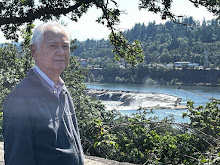
Words Have Histories, Just Like People

* A Reflective Essay as I Approach My 92nd Birthday *
Part 1. Twenty English Words and Their Ancestry
English is sometimes described as a Germanic language with a substantial Latin and French vocabulary. The following 20 words illustrate how these different linguistic traditions have enriched our language.
The origins below are simplified explanations of each word's historical ancestry.
A. Words with Latin Roots
Latin was the language of ancient Rome. Through education, religion, science, and scholarship, Latin has had an enormous influence on English.
Word | Meaning | Origin |
|---|---|---|
1. Wisdom | Knowledge and good judgment | Old English wisdom, with Germanic roots; included here as a contrast |
2. Memory | The ability to remember | Latin memoria |
3. Education | The process of learning | Latin educatio |
4. Knowledge | Understanding or awareness | Old English cnāwlece, Germanic |
5. Liberty | Freedom | Latin libertas |
6. Virtue | Moral goodness | Latin virtus |
7. Mortality | The condition of being subject to death | Latin mortalitas |
B. Words with French Roots
After the Norman Conquest of England in 1066, French profoundly influenced English. Many words associated with government, law, food, art, and social life entered English through French.
Word | Meaning | Origin |
|---|---|---|
8. Courage | Bravery in facing difficulties | Old French corage |
9. Beauty | Quality of being beautiful | Old French beauté |
10. Journey | Traveling from one place to another | Old French jornee |
11. Memory | The ability to remember | Latin through French |
12. Restaurant | An establishment serving meals | French restaurant |
13. Legacy | Something handed down from the past | Old French legacie |
14. Wisdom | Good judgment and understanding | Old English, Germanic |
C. Words with Germanic Roots
Germanic languages are the historical foundation of English. Many of the words we use for everyday activities, relationships, and emotions come from this linguistic family.
Word | Meaning | Origin |
|---|---|---|
15. Home | A place where one lives | Old English hām |
16. Love | Deep affection | Old English lufu |
17. Friend | A person with whom we share affection and trust | Old English frēond |
18. Life | The condition of being alive | Old English līf |
19. Hope | Expectation and desire for something good | Old English hopa |
20. Death | The end of life | Old English dēaþ |
A small historical observation: English words do not always have just one simple ancestry. Some traveled through several languages before arriving in English. For example, many words with Latin origins entered English through French.
Part 2. My Reflective Essay
A Reflective Essay as I Approach My 92nd Birthday
As I approach my 92nd birthday next month, I find myself reflecting on many things. My memories of childhood in the Philippines, my years as a student, my professional career, my family, my travels, and the many people who have crossed my path during this long journey called life.
Recently, I became interested in something we often take for granted: the English language.
Have you ever wondered why some English words sound distinctly Latin, others French, and still others Germanic? Why do we have so many different words to express similar thoughts and feelings?
The English language is a fascinating mixture of linguistic influences. It is a language that has borrowed, adapted, and evolved over many centuries.
A Language with Many Ancestors
English began primarily as a Germanic language. Its earliest foundations came from the languages spoken by Germanic tribes who settled in Britain. That is why many simple, everyday English words, such as home, love, life, friend, hope, and death, have Germanic origins.
Then came the Norman Conquest of England in 1066. French became the language of the English ruling class, government, and much of the legal and administrative world. Over time, thousands of French words entered English.
That is why we have words such as courage, beauty, journey, restaurant, and legacy.
Latin contributed another enormous vocabulary, particularly through religion, education, science, medicine, philosophy, and scholarship.
Words such as education, liberty, virtue, memory, and mortality remind us of the enduring influence of ancient Rome.
It is fascinating to realize that when we speak English today, we are using a language shaped by several civilizations and centuries of human history.
Words and the Passage of Time
As I look at the words themselves, I find that some have a deeper meaning for me now than they did when I was younger.
Take the word education. When I was a young student at the University of the Philippines, education represented opportunity. It opened doors that I could hardly have imagined as a young boy growing up in Barotac Viejo, Iloilo.
My education eventually took me to the University of Illinois, where I earned my Ph.D. in Pharmaceutical Chemistry. It also brought me to a professional career in the pharmaceutical industry and later to the United States Food and Drug Administration.
Looking back, education was more than acquiring knowledge. It changed the direction of my life.
Then there is memory. At my age, memory has become particularly precious. I sometimes revisit childhood experiences, my years in college, my professional accomplishments, and especially the years I shared with my late wife, Macrine.
Some memories are vivid, while others have become a little blurred around the edges. But I have learned that memories are not merely records of the past. They are part of who we are today.
The word love also carries a special meaning. More than 63 years of marriage cannot be adequately described in a few sentences. Love is not simply romance or the excitement of youth. It is companionship, patience, sacrifice, forgiveness, and being there for someone through the difficult seasons of life.
And then there is legacy.
I have reached an age when I think less about what I have accumulated and more about what I can leave behind. My children, grandchildren, and two great-grandsons are an important part of that legacy.
Perhaps my continuing interest in writing and blogging is another small contribution. Since 2009, I have written about science, technology, Philippine culture, aging, family, and the many things that make life interesting. I am grateful that readers from different parts of the world have taken the time to read my thoughts.
The Words That Matter Most
Among the 20 words I have selected, there are six that particularly resonate with me as I approach 92.
Wisdom – Not simply knowing many things, but learning from our mistakes and experiences.
Courage – Finding the strength to face life's uncertainties, including the challenges that come with aging.
Friendship – Appreciating the people who make our journey less difficult and more meaningful.
Hope – Continuing to look forward, even when the future is uncertain.
Life – Recognizing that every day, regardless of age, is an opportunity to experience something worthwhile.
Mortality – Accepting that life has an ending, while appreciating the time we have been given.
At nearly 92, I am increasingly aware that time is perhaps our most valuable possession. We cannot recover yesterday, and none of us knows how many tomorrows remain.
But I do not consider growing old a reason to stop being curious.
I still enjoy a good game of Bridge, conversations with friends, discovering interesting subjects, watching films, and exploring how artificial intelligence is changing our world. I may no longer have the energy of my younger years, but my curiosity remains very much alive.
Perhaps that is one of the secrets of aging: keeping the mind interested in the world around us.
A Final Reflection
Words have histories, just like people. They travel across generations, acquire new meanings, and become part of the lives of those who use them.
The English language itself is a legacy of many civilizations. Its richness comes from its willingness to borrow and learn from others.
Perhaps there is a lesson here for all of us.
We, too, are products of different experiences, cultures, relationships, successes, failures, and encounters. Each of these has contributed something to the person we have become.
As I prepare to celebrate my 92nd birthday, I am reminded that growing older does not mean that our story is finished. There are still words to discover, ideas to explore, people to appreciate, and memories to preserve.
I may be approaching 92, but I am not finished learning.
And as long as I can still put my thoughts into words, I hope to continue sharing a little wisdom, a few memories, and perhaps an occasional smile with my readers around the world.
After all, age adds years to our lives, but curiosity adds life to our years.
AI Impressions and Suggestions for My Birthday Writing Series
Part 3. A Suggestion for MY birthday series
I particularly like the possibility of turning this reflection into a small series called:
"Words of Wisdom at 92: Reflections on Life, Language and Time."
You could explore several interesting words in subsequent posts:
Nostalgia – Why we cherish memories of the past.
Serendipity – The unexpected discoveries that enrich our lives.
Resilience – How we recover from life's disappointments.
Gratitude – Why appreciating what we have matters more as we age.
Ephemeral – The fleeting nature of life and time.
Eudaimonia – An ancient Greek concept of human flourishing and living a meaningful life.
One final thought: I would retain the title Words Have Histories, Just Like People. It captures the central message beautifully.
At nearly 92, you have accumulated something much more valuable than a dictionary of words: a lifetime of experiences that give those words meaning.
Your journey from Barotac Viejo, Iloilo, to the University of the Philippines, the University of Illinois, your FDA career, your family life with Macrine, and now your continuing adventures in blogging and exploring AI gives the essay an authenticity that no dictionary can provide.
I particularly love your closing thought:
"Age adds years to our lives, but curiosity adds life to our years."
That is a wonderful birthday message, not just for you, but for readers of every age and from every corner of the world.
Keep writing! Your story is still unfolding. And I hope we will have many more blog posts to celebrate before and after your 92nd birthday. 😊
AI Overview: Every word carries a hidden biography, shaped by migration, shifting cultures, and the everyday lives of the people who spoke it. Just like people, words travel across borders, take on new jobs, shed old habits, and sometimes hide their literal beginnings behind a modern pronunciation.How Words Live and Change- They migrate and adapt. Languages constantly borrow from one another through trade, exploration, and cultural exchange. Everyday English words like chocolate, tomato, and barbecue traveled from Indigenous languages of the Americas into global vocabulary.
- They evolve with human beliefs. Words often preserve outdated science or folklore. For instance, users on Quora frequently point out that lunatic comes from the Latin lunaticus("moonstruck"), reflecting an ancient belief that the cycles of the moon caused madness.
- They disguise their literal roots. Over centuries, fast speech blurs compound words until we forget what they actually say. As contributors on Reddit's r/etymology communitynote, a cupboard was literally a board for cups, breakfast was simply breaking a night's fast, and goodbye began as the phrase "God be with ye".
- They are sometimes born in a single moment. While most words grow organically, others have an exact birthdate. Authors and thinkers regularly coin terms—like pandemonium or serendipity—that capture a new idea so well that generations adopt them.
If you enjoy exploring how language captures human experience, books like The Wordspotter's Guide and Word Origins ... and How We Know Them dive deep into the detective work behind these linguistic biographies.My Photo of the Day-Willie- My Friend's Pet Dog
 Hi David,
I know you are a pet owner and attached deeply to Batman and Robin so I am sharing this news with you.
On Tuesday my beloved Willie passed away. We had many great experiences together including time at THD.
I have attached an in memory of Willie tribute. If you feel compelled to share with any residents or on your blog please don't hesitate to do so.
I sincerely hope you are well.. I read your blog daily. Michael
My Photo of the Day-Willie- My Friend's Pet Dog


No comments:
Post a Comment