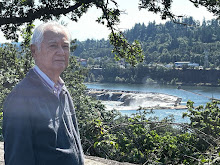
David B. Katague is an online memoirist and cultural essayist whose writing has appeared on HubPages

Monday, October 14, 2024

Pre-Colonial Filipino Literacy and Writing Systems

This is the fourth article on my blog series about the Philippines in connection with the celebration of Filipino American History Month

Did you know that early Spanish chroniclers were amazed by the literacy and linguistic proficiency of pre-colonial Filipinos?

Many local chieftains and kings were fluent in languages like Sanskrit, Old Javanese, and Old Malay.

By the early 1600s, a Jesuit priest even remarked that it was rare to find anyone, man or woman, who couldn’t read or write in their native script.

In 1609, a Spanish magistrate similarly praised the Filipinos’ impressive writing skills, noting that both men and women wrote exceptionally well in their own script.

Long before colonization, Filipinos were already highly literate, showcasing a rich tradition of written language. The Philippines was under Spanish rule from 1565 to 1898. The Americans took over from 1989 t0 1946.

The Baybayin: Ancient and Traditional Scripts of the Philippines gallery is a permanent exhibition dedicated to the traditional Filipino writing system, baybayin. This script, used by early Filipinos, is showcased through archaeological artifacts, colonial records, and ethnographic collections that highlight its historical and cultural significance.
Key artifacts like the Laguna Copperplate and the Calatagan Pot are on display, alongside items from indigenous groups in Mindoro and Palawan—such as the Hanunoo-Mangyan, Buhid-Mangyan, Tagbanua, and Pala’wan peoples—who have preserved their syllabic writing traditions to this day.
Once widely used by coastal communities in the 16th century, baybayin was inscribed on leaves and bamboo. Though gradually replaced by the Roman alphabet, it has survived in certain regions, continuing as a living tradition.
In recent years, baybayin has experienced a resurgence, embraced by Filipino youth both locally and abroad. Through websites, tattoos, blogs, and apparel, the ancient script has become a symbol of Filipino identity, blending tradition with modern, global expressions.

Aside from the famous Baybayin script, another distinct script was used in precolonial Philippines: Jawi. This Arabic-based script was primarily used by Muslims in Mindanao and is believed to have been adopted through close contact with the Malays and Bruneians.
Jawi was instrumental in spreading Islamic teachings and recording important documents.
A notable variation of this script is Kirim, a localized version used in specific communities.
The presence of Jawi highlights the rich diversity of writing systems in the archipelago and the Philippines' long-standing connection to the greater Southeast Asian and Islamic world.

Meanwhile enjoy this Aurora Borealis ( Northern Lights ) on October 10, 2024

with the San Francisco Golden Gate in the background.

Finally, my Quote of the Day: "The most terrible loneliness is not the kind that comes from being alone, but the kind that comes from being misunderstood. It is the loneliness of standing in a crowded room, surrounded by people who do not see you, who do not hear you, who do not know the true essence of who you are. And in that loneliness, you feel as though you are fading, disappearing into the background, until you are nothing more than a ghost, a shadow of your former self."
— George Orwell, 1984

Sunday, October 13, 2024

Welcome, Autumn is Here at THD

The cool and lazy morning of Autumn is here at THD.  This week autumn weather has reached the East Bay.  I am delighted for the change from three digits to perfect temperatures ranging from the low 60's in the morning and later to the low 80's in the afternoon. Here are some photos, I took this morning. 

The photo with the bougainvillea blooms I took early in the morning when it was a little bit foggy, but later cleared when I took the photo of my cacti collection.  

The photos above are my bougainvillea and cacti blooming and happy of the cool temperatures in the morning. 

Even Batman and Robin are getting lazy and started napping after their breakfast as shown in the following photos. 


Yesterday Batman was watching me doing my daily blogs setting at the top of my printer.  However, was Robin was outside hiding by the side of my garbage pail. 


Lastly,  enjoy this Poem -The Raven, by Edgar Allan Poe. 


Meanwhile. enjoy this song the Autumn Leaves

Saturday, October 12, 2024

Spanish Influence and Heritage tp Philippines Architecture

This is the third article on my blog series about the Philippines in connection with the Filipino-American History Celebration for the Month of October.
Heritage buildings are special because they tell us about our history and culture. In both Spain and the Philippines, many beautiful structures showcase a blend of architectural styles influenced by their shared history.
From the 16th to the 19th century, Spain brought its unique architectural styles to the Philippines. A great example is the San Agustin Church in Manila, a UNESCO World Heritage Site known for its stunning Baroque architecture.
You can also find the Bahay Na Bato, a traditional Filipino house that combines Spanish and local designs, featuring stone and wooden elements. This fusion of styles is known as Arquitectura mestiza, reflecting the blending of cultures.
In Spain, iconic buildings like the Alhambra in Granada and the Sagrada Familia in Barcelona represent various architectural styles, showcasing Spain's rich cultural heritage.
Unfortunately, many heritage buildings have been lost due to war, natural disasters, and neglect. For instance, during World War II, numerous structures in the Philippines were destroyed, including important historical sites. In Spain, some buildings have suffered from urban development and the passage of time.
Both countries value their heritage buildings as symbols of identity. By preserving these sites, we ensure that future generations can appreciate and learn about our shared history.

Here are some photos from my second home,Boac, Marinduque, illustrating the Spanish architectural style influence in church building as well as in some heritage homes.


Note: I have received numerous positive comments from several non-Filipino readers of my blog. They informed me they learned a lot about the Philippines and encourage me to continue writings about Philippine history, culture and traditions and current news about the Philippines. I promised I will do it to the best of my ability. Thank you all for your encouraging comments.  


Friday, October 11, 2024

The Manila Men of Saint Malo, Louisiana

This is the second series on my blog in connection with the Filipino American History Month Celebration for this month of October.

Saint Malo: The First Asian American Settlement Established by Filipino Fishermen


Saint Malo, located in Louisiana, is recognized as one of the first permanent Asian American settlements in the United States, founded by Filipino fishermen known as the Manilamen. This vibrant community emerged in the late 18th century along the shores of Lake Borgne, primarily formed by sailors who had escaped from Spanish galleons.
Established around 1763, Saint Malo's name is often linked to the French city of Saint-Malo, though the specific connection to Juan San Maló, a leader of runaway enslaved individuals, is less commonly emphasized in historical accounts. The Filipino settlers arrived during a period when both the Philippines and Louisiana were part of the Mexico-based Viceroyalty of New Spain. While oral traditions recount the existence of this settlement, the first written documentation appeared in 1883 through the writings of Lafcadio Hearn.
The Manilamen significantly influenced the local shrimping industry, introducing various fishing techniques and practices that shaped the region's economy. Their contributions extended beyond fishing; they intermarried with local communities, including Isleños and Cajuns, creating a rich cultural tapestry.
The settlement faced numerous challenges, particularly from natural disasters. In 1915, a devastating hurricane destroyed much of Saint Malo, with subsequent storms in 1965 and 2005 causing further damage. Despite these hardships, the community's legacy remains strong, and a historical marker was erected in 2019 to honor the contributions of the Manilamen. 

Lastly here are nineteen interesting facts about the Philippines that you probably did not know.


Meanwhile, thank you Carmen for a yummy breakfast yesterday with the special Spinach Turnover, Yogurt, cut orange and coffee. Thanks again to all the Kitchen Crew and Servers for your excellent job that enhance our well-being here at THD.

Good Day to ALL and Happy Friday! May you have a Fantastic Weekend!

Thursday, October 10, 2024

Jose Rizal-Philippines National Hero and Polymath

This is the first series on my blog about the Philippines in connection with October's Filipino-American History Month Celebration. It's about Jose Rizal, Philippines National Hero and first Polymath.

Jose Protasio Rizal Mercado y Alonso Realonda was born on Jose Protasio Rizal Mercado y Alonso Realonda in Calamba, Laguna, Captaincy General of the Philippines, Spanish Empire.

He was a polymath, writer, and nationalist of the Philippines who was active at the conclusion of the Spanish colonial period and was also considered the national hero of the Philippines.
He became a key member of the Filipino Propaganda Movement, which advocated political reforms for the colony under Spain.
Following the start of the Philippine Revolution, which was sparked by his writings, he was put to death by the Spanish colonial authorities for the crime of insurrection.
Although he did not actively participate in its organization or execution, he ultimately supported its objectives, which led to the independence of the Philippines.
Rizal is widely regarded as one of the greatest Filipino heroes, and an official appointed National Heroes Committee has recommended that he be given this title.
He wrote the novels Noli Me Tángere (1887) and El filibusterismo (1891), along with several poetry and articles. Here are the first 5 out of 15 interesting facts about Jose Rizal.
1. His full name was Jose Protasio Rizal Mercado y Alonso Realonda
The Rizals were of mestizo origin. His patrilineal lineage could be traced to Fujian in China through his father’s ancestor Lam-Co.
On the advice of his brother Paciano and the Mercado family, he eliminated the last three names that made up his complete name before enrolling at the Ateneo Municipal de Manila, changing his name to “José Protasio Rizal.”
The title made him look like an illegitimate child since his family never paid any attention to it but by 1891, his second surname had become so well known that his family carried the name Rizal instead of Mercado.
2. Rizal has a land surveyor and assessor’s degree
Before being brought to Manila, Rizal originally studied under Justiniano Aquino Cruz in Bian, Laguna. As his father had desired, he took the Colegio de San Juan de Letran admission exam.
Nonetheless, he enrolled at the Ateneo Municipal de Manila where he graduated as one of the nine students in his class declared sobresaliente or outstanding.
He continued his study at the Ateneo Municipal de Manila, where he earned a degree in land surveying and assessment, and together at the University of Santo Tomas, where he completed a pre-law course with an excellent grade.
3. He joined medicine when he discovered his mother was going blind
He changed his major to medicine at the Santo Tomas Medical School after learning that his mother was losing her vision and eventually chose to focus on ophthalmology.
He traveled with the support of his brother to Madrid in May 1882 and studied medicine at the Universidad Central de Madrid where he earned a degree.
He completed his eye specialization in 1887 at Heidelberg under the renowned professor, Otto Becker and later used his skills to operate his mother’s eyes.
4. He wrote a lot of poetry, essays, and novels
Rizals most famous works were his two novels, Noli Me Tángere (1887) and its sequel, El filibusterismo (1891).
These societal commentaries written during the country’s Spanish colonial era served as the foundation of literature that encouraged both pacifist reformers and armed revolutionaries.
5. Rizal had the ability to master various skills and subjects
He was an eye doctor as well as a writer, sculptor, painter, educator, farmer, historian, and journalist.
In addition to poetry and creative writing, he was also immersed in a variety of subjects with varying degrees of proficiency.
These include architecture, cartography, economics, ethnology, anthropology, sociology, theater, martial arts, fencing, and pistol shooting.
Skilled in social settings, he became a Freemason and in 1884, he attained Master Mason status.
So Rizal was a polymath which means he knows a lot of topics and can talk you out senseless with his knowledge until you accede defeat. In case you’re wondering what a polymath is, simply put - when a person's knowledge covers many different areas, he or she is a polymath.

But Rizal was more than just a nerd of the tallest order, he oftentimes would wear the armor of a hopeless romantic especially with women, fumbling his way through while his wit and wisdom drove women to shake or go weak in the knees. Using what implement, you may ask? Poetry. For women those days, poetry was an aphrodisiac.
And yet all that knowledge in his head and the things he saw in other lands through his travels, things he never learned in schools, would put him on a direct trajectory with the purveyors of corruption and greed, and ultimately martyrdom.

Here's his famous poem-Mi Ultimo Adios- My Last Farewell- English Translation. The poem was originally written in Spanish.


Note: I have received numerous positive comments from several non-Filipino readers of my blog. They informed me they learned a lot about the Philippines and encourage me to continue writings about Philippine history, culture and traditions and current news about the Philippines. I promised I will do it to the best of my ability. Thank you all for your encouraging comments.

Tuesday, October 8, 2024

Why Women Live Longer Than Men


The demographics here at THD confirmed the fact that women live longer than men. Of the 121 residents as of this writing date, there are only 28 of the male gender here at THD. This is very evident during meal times as well as during Activity events. A good example is our Bridge Monday and Friday Games. I am the only Male out of the 7 Females Playing. The other day, I was having Dinner at the Comet Room. The three Tables for 6 were occupied by 17 women and me. I commented I feel outnumbered. However, one of my mahjong buddies boosted my ego that I have been surrounded by women all my life starting from my wife, two daughters and four grand daughters and I could handled very well surrounded by 17 women in a small room for at least one hour without damaging repercussions.  And I agree!      

Older age death rates tend to be higher among men than womenThese differences are partly due to gender differences in health behaviors, such as smoking, alcohol, and drug use, and occupational risks, which tend to be more common in men and have growing consequences with age.

According to a Harvard University study, men tend to possess more muscle mass, so they can run faster and lift weights more easily than women, but they are also more likely to contract more diseases 💚and have shorter lifespans. Testosterone?💚

As people grow older, death rates rise steeply from a range of diseases, including respiratory and cardiovascular diseases, infections, cancers, and autoimmune diseases. Men tend to have higher prevalence rates and death rates from many chronic conditions, which further contributes to the gap in life expectancy.

These differences are partly due to gender differences in health behaviors, such as smoking, alcohol, and drug use, and occupational risks, which tend to be more common in men and have growing consequences with age.

As before, in 2021, all countries are above the diagonal line, which means death rates are higher in men than women.

https://ourworldindata.org/why-do-women-live-longer-than-men#:~:text=Older%20age%20death%20rates%20tend%20to%20be%20higher%20among%20men%20than%20women&text=These%20differences%20are%20partly%20due,have%20growing%20consequences%20with%20age.

💚https://madan.org.il/en/news/why-do-women-live-longer-men

Have a Great Day to ALL!  Be Kind to one Another as well! 

Friday, October 4, 2024

Rapid Turnover of THD Employees

Teresa Nudo- our recent Host and Chaperon during our Lunch Excursion at the SalesForce Rooftop Garden Park in San Francisco

Let me start this posting by stating that I am very happy here at THD.  However, a recent event  affected the spirit and lower the morale of several residents including myself.  It was the unexpected and sudden departure of Teresa Nudo- Activity Coordinator.  Rumor has circulated that she was fired and did not leave voluntarily. If this is true, something is rotten in Denmark!  (THD Management).  

I know it is none of my business of what is going on between THD-Management and its employees. But unexpected events of employees disappearing without explanation deserves a comment from me as a blogger.  Other residents probably can not care less, but after a while some of us residents developed a bond  (friendship) with the THD employees that help promote the enhancement of our well-being as well as a sense of belonging in our aging years at THD.     

I believe Teresa was doing an excellent job as Activity Coordinator and was well like by majority of residents because of her empathy for senior citizen issues.  Personally, I believe Teresa was doing an excellent job in the Activity Department. Her most recent hosting job was to chaperon us to the lunch excursions at the Rooftop Park in the SalesForce Tower in San Francisco.

Previously she worked as Resident Liaison and assisted Jenny Shively in the Marketing/Leasing Department.   We will miss you Teresa, Your empathy and kindness to the senior residents here at THD we will always remember.  Good Luck in your future endeavor.  

Here's an excerpt from my previous posting about THD.  

" Note that THD has been rated as a 5 Star Active Senior Living Community in the SFO East Bay. However,  Criticisms has touched on areas like parking availability and the handling of emergency situations ( no generator during power outage), suggesting a need for better communication and preemptive measures.  In addition, the rapid turnover of employees in the Activity Department also generated some negatives comments from a number of Residents". 

Another recent THD employee turnover was the sudden disappearance of our recent Sous Chef, Alberto Alvarez in the Newton's Kitchen.  I have talked to him when he joined the Kitchen staff just recently.  His several years of experience as Cook for a French Restaurant in San Francisco impressed me. During his few weeks of employment here, I noticed there were some creative changes in the Dinner and Dessert Menu, that a lot of residents like.  I heard Alberto quit on his own volition after some major disagreements with Agustin. If this is true, I would not be surprised for as the saying goes:

TOO MANY COOKS IN THE KITCHEN SPOILS THE BROTH 

I hope our Dinner Menu and Lunches be more creative and varied. Variety is the Spice of Life. I am looking forward for another Filipino Dinner this month to celebrate Filipino-American History Month.      Thank You, Agustin and the Kitchen Crew!    


Prediction for Future THD Employee Turnovers: My guess  is there will be one or two more employee turn over before the end of the year by either voluntary retirement or change for a better positions both financially and a working environment. 
 Have a Great Day Every One!

Related Posts Plugin for WordPress, Blogger...