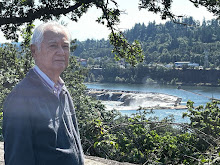
David B. Katague is an online memoirist and cultural essayist whose writing has appeared on HubPages

Wednesday, April 20, 2016

Will My Papaya Bear Fruit in A Container?


The other day, while shopping at our local garden store my eyes bulged with excitement when I saw a Hawaiian papaya( Solo variety) on sale. The price was not cheap. I paid $14.95 for a 2.5 gal ( see photo above). The photo above is the plant after I transferred it to a bigger 5 gal container. I remember very well that the Solo Variety of papaya although small is very sweet.

I hope my papaya will bear fruit this season if not next year. The above incident reminded me of the article I wrote five years ago about the Papaya trees in my garden, that I am reposting today as follows:


I have about six varieties of papaya trees in my garden at Chateau Du Mer in Boac, Marinduque. Of the six varieties, I like the Solo variety imported from Hawaii. The fruits are small but sweet and firm. The other varieties yields bigger fruits but is not as sweet and firm. (see photo above)

Speaking of Papaya Fruits, I am proud to inform readers of this blog, that my doctoral thesis from the University of Illinois, Chicago, USA was on the Papaya Fruit. The title of my thesis was " Chromatographic Analysis of the Volatile Components of the Papaya Fruit". This was published by the Journal of Pharmaceutical Chemistry, Vol 54, No 6, pages 891-894 dated June, 1965. The following is additional information about the Papaya from Wikipedia.

Originally from southern Mexico, particularly Chiapas and Veracruz, Central America and northern South America, the papaya is now cultivated in most tropical countries, such as Brazil, Bangladesh, Pakistan, India, Indonesia, South Africa, Sri Lanka, Vietnam, Philippines and Jamaica. In cultivation, it grows rapidly, fruiting within 3 years. It is, however, highly frost sensitive.

In the 1990s, the papaya ringspot virus threatened to wipe out Hawaii’s papaya industry completely. Two varieties of papaya, SunUp and Rainbow, that had been genetically modified to be resistant to the virus, were introduced into Hawaii.By 2010, 80% of Hawaiian papaya was genetically modified. Today there is still no conventional or organic method of controlling the ringspot virus. In 2004, non-genetically modified and organic papayas throughout Hawaii had experienced hybridization with the genetically modified varieties.

Papaya Fruit
Uses

Papaya can be used as a food, a cooking aid, and in medicine. The stem and bark are also used in rope production.

Gastronomy

The ripe fruit is usually eaten raw, without skin or seeds. The unripe green fruit of papaya can be eaten cooked, usually in curries, salads and stews. It has a relatively high amount of pectin, which can be used to make jellies.

Green papaya is used in Thai and Filipino cuisine, both raw and cooked.

The black seeds are edible and have a sharp, spicy taste. They are sometimes ground up and used as a substitute for black pepper. In some parts of Asia the young leaves of papaya are steamed and eaten like spinach. In parts of the world papaya leaves are made into tea as a preventative for malaria, though there is no real scientific evidence for the effectiveness of this treatment. The following is Papaya, raw Nutritional value per 100 g (3.5 oz)

Energy 163 kJ (39 kcal)
Carbohydrates 9.81 g
Sugars 5.90 g
Dietary fibre 1.8 g
Fat 0.14 g
Protein 0.61 g
Vitamin A equiv. 55 μg (6%)
- beta-carotene 276 μg (3%)
Thiamine (Vit. B1) 0.04 mg (3%)
Riboflavin (Vit. B2) 0.05 mg (3%)
Niacin (Vit. B3) 0.338 mg (2%)
Vitamin B6 0.1 mg (8%)
Vitamin C 61.8 mg (103%)
Calcium 24 mg (2%)
Iron 0.10 mg (1%)
Magnesium 10 mg (3%)
Phosphorus 5 mg (1%)
Potassium 257 mg (5%)
Sodium 3 mg (0%)
Percentages are relative to US recommendations for adults.

Cooking

Green papaya fruit and the tree's latex are both rich in an enzyme called papain, a protease which is useful in tenderizing meat and other proteins. Its ability to break down tough meat fibers was used for thousands of years by indigenous Americans. It is included as a component in powdered meat tenderizers.

Here's a short video of commercial papaya farming from Australia


Medicine

Papaya is marketed in tablet form to remedy digestive problems.

Papain is also applied topically (in countries where it grows) for the treatment of cuts, rashes, stings and burns. Papain ointment is commonly made from fermented papaya flesh, and is applied as a gel-like paste. Harrison Ford was treated for a ruptured disc incurred during filming of Indiana Jones and the Temple of Doom by papain injections.

Women in India, Bangladesh, Pakistan, Sri Lanka, and other countries have long used green papaya as a folk remedy for contraception and abortion. Enslaved women in the West Indies were noted for consuming papaya to prevent pregnancies and thus preventing their children from being born into slavery.[citation needed] Medical research in animals has confirmed the contraceptive and abortifacient capability of papaya, and also found that papaya seeds have contraceptive effects in adult male langur monkeys, possibly in adult male humans as well.[11] Unripe papaya is especially effective in large amounts or high doses. Ripe papaya is not teratogenic and will not cause miscarriage in small amounts. Phytochemicals in papaya may suppress the effects of progesterone.

Papaya is frequently used as a hair conditioner, but should be used in small amounts. Papaya releases a latex fluid when not quite ripe, which can cause irritation and provoke allergic reaction in some people. The papaya fruit, seeds, latex, and leaves also contains carpaine, an anthelmintic alkaloid (a drug that removes parasitic worms from the body), which can be dangerous in high doses.

It is speculated that unripe papayas may cause miscarriage due to latex content that may cause uterine contractions which may lead to a miscarriage. Papaya seed extracts in large doses have a contraceptive effect on rats and monkeys, but in small doses have no effect on the unborn animals.

Excessive consumption of papaya can cause carotenemia, the yellowing of soles and palms, which is otherwise harmless. However, a very large dose would need to be consumed; papaya contains about 6% of the level of beta carotene found in carrots (the most common cause of carotenemia) per 100g.

Medicinal potential

* The juice has an antiproliferative effect on in vitro liver cancer cells, probably due to its component of lycopene or immune system stimulation.[16]

* Papaya seed could be used as an antibacterial agent for Escherichia coli, Staphylococcus aureus or Salmonella typhi, although further research is needed before advocating large-scale therapy.

* Papaya seed extract may be nephroprotective (protect the kidneys) in toxicity-induced kidney failure.

For a change of mood, here's how to make green papaya salad the Thai Way!(different from the Philippine acharra)

Saturday, April 16, 2016

A Simple Recipe for Pompano Fish in Sweet and Sour Sauce


Today, I cooked my first fish dish in sweet and sour sauce. The fish was pompano. My wife and I purchased the fish from Seafood City yesterday. This recipe is very easy and simple to follow. Try it!

Ingredients:

4 medium sized pompano fillet (from 2 whole medium sized fish). The whole fish(including the head) may be used if desired.
1 tablespoon soy sauce
1 tablespoon all purpose flour
2 cups oil for frying
1 green bell pepper, diced
1 red bell pepper, diced
1 onion, diced
1 can ( 8 oz) pineapple chunks, juice reserved
1 1/2 tablespoon white sugar
3 tablespoon ketchup
Garlic Salt to taste
1/2 cup water

Direction: Marinate the pompano fillet(or whole fish) in soy sauce for 30 minutes. Meanwhile, heat oil in deep-fryer or heavy sauce pan to 375 degrees F. Deep fry the fish until golden brown. Drain the pompano on paper and set aside.

Prepare the sauce as follows: Saute the onion, the red and green peppers and pineapple in a skillet for 1 to 2 minutes. Stir in the reserved pineapple juice, sugar, ketchup, water and the flour. Mixed and stir for about 2 minutes then add the garlic salt to taste. Cook until thickened, stirring occasionally. Add more flour if necessary.

Serve the fish with sauce on top with steam rice and papaya( pickled green papaya) achara. Bon Apetit!

Wednesday, April 13, 2016

Are You Over 80 Years Old and still Blogging?

If you are, I would like to be friends with you. We have something in common. And at our age, to be able to blog and be active also in social media sites, it is a reason to celebrate. Everyone, young or old bloggers had a reason for blogging. I have already stated my own reasons in several of my blogs. But in case this is your first time to read my blogs, the main reason why I blog is because I love to write and second to advertise my small beach resort in Boac, Marinduque, Philippines.

The last summary of demographics (Age) of personal bloggers showed that gender wise, the percent between male and female is about the same with slightly higher female percentage(50.9% vs 49.1%). Majority of personal bloggers are from the US, followed by UK and Japan.

According to data published by sysomos.com, the most active bloggers are younger people who have grown up during the blogging "revolution", which started about nine years ago. Bloggers in the 21-to-35 year-old demographic group account for 53.3% of the total blogging population. This group is followed by the generation just behind them - people 20-years-old or under are 20.2% of the blogging landscape. This group is closely followed by 36-to-50 year -olds (19.4%), while bloggers who are 51-years-old and older only account for 7.1%. There is no specific data on bloggers over 75 years or older. I would guess less than 1% is a probable number.

Thus if you are over 75 and still blogging you are a rare breed. I would like to be friends with you. You can reached me via my personal blog and autobiography at http://davidbkatague.blogspot.com or via my Facebook Account under David B Katague. I am looking forward to hear from you! Happy Blogging! Note: this invitation is also open to all readers of my blog.

Tuesday, April 12, 2016

A Beautiful Spring Day in Northern California

New Plantings in My Front Yard-Celebrating Spring!
Today is a beautiful and sunny day in Northern California. It reminded me of one of my favorite classical pieces-Spanish Romance. Today I have chosen two renditions of this piece for your enjoyment. The first one is the piano version and the second one the guitar interpretation of Jesse L. Which one is your favorite?

Sunday, April 10, 2016

The Tango and Memories of My Father


Last November 30 was the 43rd anniversary of the death of my father, Dr David Javellana Jamili K(C)atague. The tango reminds me of him since the tango was his favorite dance. The following article is an excerpt from my blogs that I wrote three years ago.

When I was a teenager growing up in the 3rd class town of Barotac Viejo, Iloilo, Philippines, My father used to teach us (me and my cousins) how to dance the tango, paso doble, the rumba and the waltz. This music does reminds me of my teenager days. This is one of the many reasons, why my favorite TV shows today are Dancing with the Stars(DWTS) and So You Think You Can Dance(SYTYCD).

I hope you enjoy the following video(s) and related music as much as I do. If you do, please do not forget to click on my ads. Have a Great Day!


Do not forget to view the related videos in this set. I recommend the Tango with the La Cumparsita music. This music was the first tango music my father used to teach us. Pleasant memories indeed!

Monday, April 4, 2016

What Do You Know about Kurapia as a Ground Cover?

I have been doing some research on drought resistant ground covers suitable for growing here in Northern California. I have started changing my grass lawn to drought resistant ground covers.  Last week I have installed Hypericum calycinum( creeping St John Worth) on my side yard, but have not done anything thing in my front yard. I am looking into kurapia for my front yard. However, from what I heard it will be twice as expensive as the Hypericum ground cover. Do you have or know of someone with a kurapia lawn? I would like to know if the cost will be justified with its value and savings from lawn watering and moving. 

The following is some information about this drought resistant ground cover originally from Japan.
    
Kurapia [Phyla (Lippia) nodiflora (L.)E. Greene] is a low growing, herbaceous, perennial dicot groundcover belonging to the Verbanaceae or Verbena family. Although the species is either native or naturalized to California, Kurapia is a sterile, non-invasive, cultivar from Japan, which is propagated vegetatively by plugs or creeping stems (stolons) only. Kurapia’s dense canopy and deep root system provide excellent drought tolerance and soil stabilization even on steep slopes.It is also tolerant to a wide range of soil conditions including salinity, but generally prefers sandy, well-drained soils. Kurapia reaches a maximum height of 3 to 6 inches and produces numerous small, white flowers from spring to late summer. As a result, mowing is not required. However, regular mowing with a rotary or reel mower as low as 2 inches can be used to minimize flowering. Kurapia can tolerate partial shade and light traffic when maintained either non-mowed or mowed similar to a lawn; however, it is not recommended for use under intensive, concentrated traffic. 

Kurapia is adapted to climate zones of 7b and higher. In regions where average daily temperatures remain above 45 °F, Kurapia will stay evergreen; however, growth will gradually decrease and enter dormancy when average daily temperatures fall to around 38 °F and Kurapia has been known to survive temperatures as low as 13 °F. These temperatures are provided as estimates, as Kurapia greenness, dormancy, and survival will depend upon specific location and environmental factors. ( www.kurapia.com)

Sunday, April 3, 2016

My New Landscaping Project

Last week, I decided to change my grass lawn for a drought resistant ground  cover. I did some research on ground covers that thrives well in our area. I decided on Hypericum calycinum commonly known as St John Worth or Aaron Beard.  Above is a photo of my lawn new planting.  I hope that in a years time it would look like the photo below. The culture of Hypericum is also  listed below.


Culture

Easily grown in average, medium, well-drained soil in full sun to part shade. Tolerates wide range of soils. Thrives on sandy soils in full sun. Less floriferous in part shade. Evergreen in warm winter climates. Usually dies to the ground or suffers some tip dieback in cold winter climates, but blooms on new growth and comes back nicely each spring. In areas where it does not die in winter, shear or mow plants in late winter or early spring every 2-3 years to renew and induce new growth. Spreads rapidly by underground stems and can spread aggressively in ideal growing conditions. Plant 18" apart for use as a ground cover.

Noteworthy Characteristics

A stoloniferous subshrub or shrublet, typically growing 12" (less frequently to 18") high and 24" wide, which is frequently planted as a ground cover. Features large, rose-like, 5-petaled, yellow flowers (2-3" diameter) having numerous, bushy stamens with reddish anthers. Flowers appear singly or in groups of 2-3 and cover the plant in summer. Oval to oblong, distinctively net-veined (from beneath) leaves (to 4" long) are rich green in sun but are a lighter, yellowish green in shade. Four-angled stems are both procumbent and ascending. Sometimes commonly called Aaron's beard or creeping St. John's wort. Plants of the genus Hypericum (some species have been used since ancient times in the treatment of wounds) were apparently gathered and burned to ward off evil spirits on the eve of St. John's Day, thus giving rise to the genus common name of St. John's wort.

Problems: No serious insect or disease problems.

Garden Uses: Ground cover, rock gardens, border fronts, naturalized plantings. Also good for stabilizing embankments or hillsides. Good for planting under trees where it competes well with shallow tree roots. Allan Armitage calls this "one of the finest ground covers available."

Related Posts Plugin for WordPress, Blogger...