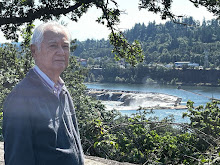

My AI Caricature -A Short Visual Autobiography by ChatGPT
I have been thinking about a question that seems simple on the surface but grows more complex the longer you sit with it: how old is old?
In America, “old” often comes with a number attached-65, maybe 70, sometimes 80. It is the age of retirement, Medicare, senior discounts, and, in many ways, quiet social expectations about slowing down. But numbers alone feel inadequate. They do not capture the lived texture of aging, especially when you observe it up close in a senior living community or within your own body.
I live among people who would be categorized as “old,” yet I see a wide spectrum of vitality. One neighbor in her late 80s walks every morning with a steady rhythm, greeting the day as if it still holds promises. Another, younger by a decade, struggles with mobility and fatigue. So which one is old?
It reminds me of Filipino cultural perspectives, where age has traditionally been tied not just to years, but to role and respect. Elders are not simply “old”; they are carriers of memory, anchors of family identity, and often the moral compass of the household. In that context, aging is not decline, it is accumulation. You do not become less; you become more.
Yet here in the United States, aging can sometimes feel like a gradual erasure. Society celebrates youth, speed, and novelty. The older you get, the more invisible you risk becoming. And that invisibility can shape how people see themselves. When someone begins to say, “I’m old now,” it is often less about their physical condition and more about how they believe they are perceived.
From a physical standpoint, aging is undeniable. I feel it in my own body, especially in the quiet language of chronic pain. My weekly massage sessions have become not just therapy, but a conversation with time itself. Tight muscles, lingering soreness, the slow recovery—these are reminders that the body keeps score. But even here, there is nuance. Pain does not always mean frailty. Sometimes it reflects endurance—the miles walked, the burdens carried, the years lived fully.
So again, how old is old?
I think “old” begins not at a specific age, but at a shift in mindset. It is when curiosity fades, when engagement with the world narrows, when the future feels closed rather than open. Conversely, I have seen people in their 90s who are still asking questions, still forming opinions about world events, still participating in conversations about culture, politics, and technology. They are not old in the way the word is often used.
Consider this: a 75-year-old who is learning to use AI tools to tell stories or connect with others is, in many ways, younger in spirit than a 45-year-old who has stopped adapting altogether. Age, then, is not just biological-it is relational, intellectual, and emotional.
In my own observations, especially within the senior community, the people who age best are those who maintain three things: connection, purpose, and curiosity. Connection keeps them grounded in relationships. Purpose gives them a reason to wake up each day. Curiosity keeps their inner world alive, even as the outer world changes.
If I were to offer an illustration, I would describe aging like a painting. In youth, the colors are bright and sharply defined. As time passes, layers are added, some dark, some light, some unexpected. From a distance, the painting may look more muted, but up close, it holds far greater depth and meaning. To call that painting “old” as a dismissal would be to miss its richness entirely.
So perhaps the better question is not “how old is old,” but “what does aging mean to us?”
If aging is loss, then “old” will always feel like an endpoint. But if aging is accumulation of stories, relationships, resilience, and insight, then “old” becomes something else entirely. It becomes a stage of life that still has value, still has voice, and still has relevance.
In the end, I am not convinced that “old” is a fixed destination. It is a label we assign, often too quickly, without considering the full humanity of the person wearing it.
And maybe, just maybe, the moment we stop asking how old someone is and start asking how they are living, that is when we begin to understand what aging really means.
Finally, My Photo Of the Day: My 3-Year Indoor Avocado Tree 
- Trade Escalation with Canada: President Trump imposed 50% tariffs on a broad range of Canadian imports (spanning autos, dairy, and alcohol), escalating trade disputes between the North American neighbors.
- Continued U.S.-Iran Conflict: The Pentagon reported nearly 100 U.S. troops have been injured over the last two weeks, as the U.S. military launched fresh strikes on Iran for the tenth consecutive night.
- Red Sea Blockade Threats: Yemen's Iran-backed Houthi militia declared a naval embargo on Saudi Arabian shipping ports, widening the conflict and causing spikes in global energy prices.
- Tropical Storm Bertha: Tropical Storm Bertha formed off the Florida Panhandle and is currently churning its way toward the northern Gulf Coast, prompting storm and flood alerts.
- Major Lettuce Recall: The FDA has expanded its warning regarding a Cyclospora outbreak. Shredded iceberg lettuce distributed by Taylor Farms remains the focus of an extensive traceback investigation linked to intestinal illnesses.
:::


No comments:
Post a Comment