Growing Old in the Oval Office: A Reflection on Age, Health, and the Presidency

The American presidency has always been one of the most demanding jobs in the world. It requires long hours, constant travel, difficult decisions, and the ability to respond to crises at any moment. It is a position that tests not only intelligence and judgment but also physical stamina and mental resilience.
In recent months, numerous articles and social media posts have focused on President Donald Trump and his health. Photographs showing him appearing tired during meetings, reports discussing bruising on his hands or swollen ankles, and videos analyzed frame by frame have fueled endless speculation. At the same time, the White House has maintained that the President is fully capable of carrying out his duties and is physically fit to serve.
So where does the truth lie? The honest answer is that none of us outside the President's medical team truly knows.
Photographs can be misleading. A single image captures only a fraction of a second and may reflect nothing more than fatigue after a long day or an awkward camera angle. Bruising can occur from ordinary medical procedures or simply from aging skin, which becomes thinner and more fragile. Swollen ankles may have several possible explanations, many of which are common among older adults and not necessarily debilitating.
On the other hand, public concern about the health of a president is understandable. The office carries enormous responsibilities affecting not only the United States but also the entire world. Citizens naturally want assurance that their leader possesses the physical and cognitive capacity to fulfill those responsibilities.
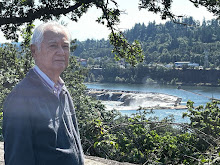
As someone who has reached the age of 91, I view this discussion from a different perspective. Aging is inevitable. None of us escapes it.
I know firsthand that our bodies change. We may walk more slowly, require more rest, or deal with chronic medical conditions. Yet many seniors remain intellectually active, productive, and capable of making sound decisions. Some continue writing books, practicing law, teaching university courses, leading businesses, or serving their communities well into their eighties and nineties.
Chronological age alone is not a reliable measure of ability.
History offers many examples of leaders who governed effectively despite advanced age, just as it offers examples of younger leaders who failed despite having youth on their side. Leadership depends on judgment, experience, temperament, character, and the ability to surround oneself with competent advisers.
The modern media environment complicates the issue. Every stumble, every yawn, every facial expression, and every brief moment with closed eyes is instantly shared millions of times online. Political supporters and opponents alike often interpret the same image through completely different lenses.
This makes objective evaluation increasingly difficult.
The public deserves transparency regarding the health of any president, regardless of party. Medical reports should be as complete and factual as possible while respecting reasonable personal privacy. At the same time, speculation based solely on isolated photographs or edited video clips should be viewed cautiously.
As an immigrant who became an American citizen more than fifty years ago, I have watched many presidents come and go. Some inspired me, some disappointed me, but all carried burdens few of us can fully appreciate. The presidency ages every occupant.
Perhaps the larger lesson is not about one individual but about society's attitude toward aging itself.
Too often, we equate wrinkles with weakness and gray hair with decline. Yet many older adults possess qualities that only decades of living can provide: patience, perspective, resilience, and wisdom born from experience.
I see this every day among my fellow residents here at The Heritage Downtown in Walnut Creek. Many are in their eighties and nineties. Some move with canes or walkers, yet their minds remain sharp, their humor intact, and their life stories richer than any history textbook.
Age should invite careful evaluation, not automatic dismissal.
Whether one supports or opposes President Trump politically, discussions about his health should be grounded in evidence rather than rumor, medical facts rather than internet speculation, and fairness rather than partisanship.
In the end, history will judge every president by the quality of the decisions made while in office, not by a single photograph, a viral video clip, or the appearance of aging hands.
For those of us fortunate enough to grow old, aging is not a sign of failure. It is a privilege. The real question is not whether a leader has wrinkles or gray hair, but whether that leader still possesses the judgment, energy, and wisdom to serve the nation faithfully.
That is the standard by which every president, past, present, and future should be judged.

- Physical Symptoms: The President’s advanced age has been accompanied by benign but visible conditions, such as superficial chronic venous insufficiency (which causes leg and ankle swelling) and hand bruising linked to medication and frequent handshaking.
- Cognitive Metrics: The White House has consistently reported that the President has scored perfectly on standard cognitive assessments (such as the MoCA, initially designed to screen for dementia). ]
- Stamina & Demeanor: The President's aides and supporters often praise his vigorous routine, but critics have raised red flags over moments of perceived fatigue, such as reports of appearing drowsy during cabinet meetings or switching to more comfortable footwear.
- Lack of Transparency: Because presidents are not legally obligated to release their full medical records, administrations historically curate the health information that is shared with the public. This selective disclosure naturally fuels public doubt regarding true mental and physical fitness.


No comments:
Post a Comment