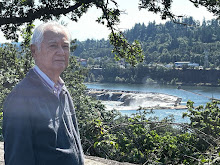
This is a new site highlighting my autobiography with my name David B Katague spelled backwards. The photo above is Chateau Du Mer Beach House in Boac, Marinduque, Philippines. Photo taken in the Spring of 2012.
David B. Katague is an online memoirist and cultural essayist whose writing has appeared on HubPages
Sending Holiday Greetings to all the Women (and Men) who have touched my life.
The following photos are some of the women that have touched my life.
Mama Pacing ( Paz Barrido Balleza Katague) and Me, 1976
Macrine( bride) and Sister Guia ( bridesmaid), Katague-Jambalos Wedding May 8, 1957
Ditas Baptism Party, KC, Mo, 1965
The Four Sisters( Fe, Sister Guia, Charro and Jean) of Macrine and First Cousin, Angie Jambalos Aulds, 2015
I love my four sisters-in-law. Yesterday ( a day after my 82BD), Charro and Jean surprised me by bringing a cake( see photo), pancit( noodles) for long life and curried chicken adobo( my favorite Pinoy dish) for a belated birthday party celebration. Thank you Jean and Charro for the visit and the goodies.
Two candles for my 2nd year after 8 decades.
Dinah and Elaine, 2014
Ditas and Carenna, 2016
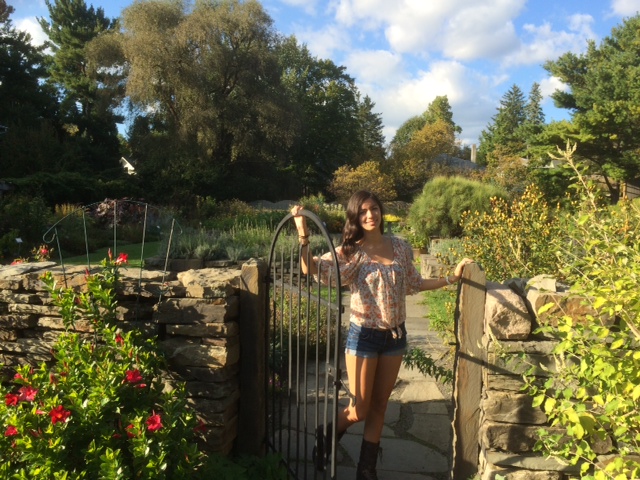
Grand Daughter, Alix Katague at Cornell University Gardens, 2014
Grand Daughter, Marina Katague High School Graduation Photo
Grand Daughter, Carenna Katague Thompson, 2016
Daughter Ditas and Me, 1982
Grand Daughters Marina and Alix Katague-Daughters of Dodie Katague-my oldest son, 2014
Dinah and Elaine, 2016
Carenna with her guitar getting ready for her singing weekly night club gig
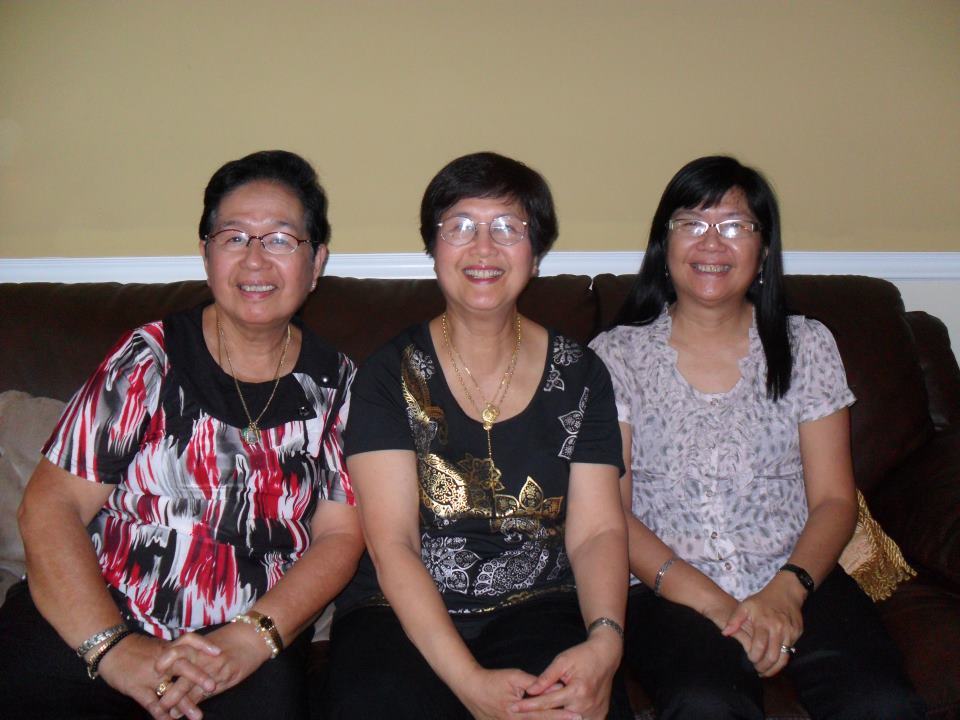
My Three Sisters, Myrla, Agnes and Amor, 2014
Amor and Pol Wedding, with Mama Pacing, Brothers and Sisters, 1976
Today is my 82nd birthday. There will be no party, just a Lobster Dinner with Champagne. The party will be in four days during Christmas Eve when all my 4 adult children and 6 grand children celebrate Christmas with us (Macrine and I). As usual we have Honey-Baked ham and Chicken Macaroni Salad. I am reposting an excerpt from my recent posting on the subject topic of my last blog as follows.
"Today, I am also thinking of the subject topics of my last blog. It will not be lecture although, I used to be a teacher, Instructor, UP Chemistry(1956-1959)in the Philippines. What would be the subject of my last blog ? For sure it will not be an article filled with high sounding words. It would be a simple and a direct post that comes from the heart. It will probably be a summary of what I have done both professionally and personally. I hope that my last blog will continue to inspire the younger generation as they read the ups and down of my autobiography.
Here's a summary from my Pamana Award in Chemistry Nomination Package, perhaps my future epitaph with the addition that I was also a loving and caring husband, father and grand father and maybe a loving great grand father.
"Dr Katague is a trailblazer in the field of Chemistry and Drug Regulation. He is the first Filipino American to attain the position of Team Leader and Expert in the Center of New Drugs, Food and Drug Administration. He is also the first Filipino-American to be elected for two 5 year terms( 1995-2005) to the United States Pharmacopeia Council of Experts since its inception in 1820. Dr Katague's drive and energy to succeed is a representation of the Filipino people's talent and passion for excellence. He has shown that Filipinos can contribute significantly to the advancement of science, therefore help the world a better and safer place by insuring that only safe and better quality drugs are approved and marketed.
Dr Katague had also more than 22 years experience in agricultural research( pesticides residues analytical method development) working for three private companies in the US".
My Outstanding Senior Citizen Award in Chemistry, Science-Research from Parangal, 1998, Washington, DC
Again, I am thanking the Lord for his blessings on my 82nd birthday. As an addendum to my 82nd birthday, I have reposted a few days ago my article on the Chapel of the Holy Sacrifice of the Mass in UP Diliman, Q.C. Philippines that was inaugurated on my 21st birthday. My name is one of the one thousand names buried in the Foundation of the Chapel.
Thank you to all my Relatives and Friends who follow my blogs as well as to all my FaceBook friends especially those who had already sent their birthday greetings in my FB page.
Christmas Tree Decorated with White House Ornaments and Personal photo decor
Note: Today is also the 22nd birthday of my grand daughter Alix Katague, oldest daughter of my oldest son, Dodie( Diosdado) Katague.
I will always be 60 years older than Alix.
Last October while we were in Macrine's neurologist for her quarterly check up, I discussed with her neurologist not only the current trends on Parkinson Disease therapy but also on other types of movement disorders that he specializes. In his office, there is a plaque that listed his specialty, Parkinson Disease(PD) and other movement disorders. I asked him what are examples of other movement disorders besides PD. He give me the list below. What are movement disorders(MD)?
Movement disorders are neurological conditions that affect the speed, quality and ease of movement. Hypokinetic movement disorders are characterized by lack of movement. Hyperkinesias refer to conditions characterized by excessive movements. Dyskinesias are involuntary movements that can occur as a side effect of medications used to treat Parkinson’s disease.
Primary types of movement disorders are listed below: Balance Disorders, Corticobasal Degeneration, Dystonia, Essential Tremors, Huntington's Disease, Multiple System Atrophy, Parkinson's Disease, and Progressive Supranuclear Palsy.
A short description of some of the most common movement disorder and Parkinson Disease are listed on www.news-medical.net as follows:
1. Tremor: The most common movement disorder is essential tremor. It affects one in 20 people under the age of 40 and one in five people over 65. The disorder is characterized by shaking of the hand or fingers when it attempts to perform a task. The tremors are usually involuntary, rhythmic or pendulous movements of a part of the body.
2. Parkinson’s disease: Parkinson’s disease affects one in 500 individuals and in most cases is caused by genetic predisposition or exposure to certain drugs and toxins. Parkinson’s disease is characterized by rigidity of muscles, tremors and shaking and a short “shuffling” gait. Eventually the patient may fail to perform his or her daily activities and may have to depend on their caregivers. Parkinson’s disease is a severely debilitating disease.
3. Dyskinesia: This is a symptom of an underlying movement disorder. Dyskinesia literally means abnormal (dys) movements (kinesia). This is characterized by spasms, tics and twitches or more complex slow writhing movements (athetosis), rapid, jerky movements (chorea) or spasm of a group of muscles (dystonia). Dyskinesia may be seen in Parkinson’s disease and other similar conditions. They may be seen on intake of certain drugs like Levodopa for Parkinson’s disease therapy or antipsychotic medications for psychiatric conditions.
4. Dystonia: Dystonia is characterized by sustained spasm or contraction of a group of muscles. This may lead to painful writhing movements or abnormally held postures. Writer's cramp is an example of focal dystonia that affects the fingers of the writing hand. It is often sudden in onset and disappears by itself on rest. Similar dystonia may affect the eyelids leading to blepharospasm. This leads to increased blinking and involuntary closing of the eyes.
5. Tics: These are small movements or twitches that are repeated in a group of muscles. The movements include blinking, shrugging, grunting or grimacing.
6. Dysphonia: There are abnormal movements of the muscles involved in voice production and speech. The voice as a result becomes quivery, jerky or strained and hoarse.
7. Ataxia: This affects regular movement of walking, running etc. There is a problem with posture maintenance and control of coordination and balance. Ataxia is usually a symptom of conditions such as multiple sclerosis or cerebral palsy rather than being a disease in itself. It is caused due to diseases of the cerebellum or base part of the back of the brain. Commonly alcohol consumption may lead to ataxia.
8. Restless legs syndrome: This is a common movement disorder affecting one in 10 individuals. There are intensely uncomfortable sensations in the legs and sometimes arms typically seen during bedtime or at rest. It may be felt as tingling or creeping that is relieved by movement of the limbs. This leads to disturbed sleep and insomnia.
9. Huntington’s disease: This is a genetic condition that affects movements. There is chronic progressive chorea or rapid jerky purposeless movements of various groups of muscles. There is additional emotional, behavioral, and psychiatric abnormalities.
Macrine had been coped up in the house and felt like she was in prison ( her own words) this past week because it had been raining. Yesterday, she wanted to go the Mall just to buy her Shishedo makeup at Macy and may be a pajama. I did not realized that yesterday was Super Saturday- the busiest and biggest shopping day of the holiday season.
"From Fortune News last Friday: According to a survey released on Friday by the National Retail Federation and Prosper Insights & Analytics, some 66% of Americans, or 155.7 million people, are planning to go shopping on Saturday, December 17. (Some 99 million of them hit stores over Thanksgiving weekend.) The day is known as Super Saturday because it is the last full Saturday of shopping before Christmas. (Next Saturday, Christmas Eve, doesn’t count because stores close earlier.) Black Friday and Cyber Monday get all the attention, but Super Saturday, which takes place tomorrow, will be the biggest shopping day of the holiday season, hands down".
The parking lot was full including the Handicaff Parking. It took me a couple of rounds to find one Handicaff parking space. When we entered Macy there was a big crowd but the Shiseido section was empty. We were served immediately. Macrine can not remember what she needed. The sales lady asked our phone number and could tell us what was the last purchased Macrine and I did six months ago. I know she purchased a Foundation and Lipstick. The sales lady recommended a Moisturizer set( One for the Day and One for the Night). Macrine ask how much is the cost. The sales lady said, each will cost $99. I was not surprise of the cost. Shishedo cosmetics are expensive. After a few minutes, Macrine decided just to buy the Day moisturizer provided she gets a gift. So besides the Moisturizer she got a red cosmetic purse, a 25ml lotion and another 10 ml cleansing lotion. (see photo above). Incidentally Macrine had been a loyal customer of Shiseido products for the last 50 years.
After our Macy purchase, we went to the See Candies store. The line was so long Macrine decided not to wait in line. I told her just relax and I will be the one to form in line. Luckily, See's had two lines and cashier. The shortest line was for the pre-package and already gift-wrapped chocolates. I normally do not buy pre-packaged See Candies, but it is really a "no brainer" that I chose the short line. In five minutes, I was out of the candy store.
We sat for a while and listened to the live Christmas concert in the mall while enjoying our chocolate candies. After we eat some chocolate and Macrine had rested, she decided we go to Sears to buy her and myself pajamas. We entered the Sears stores. It was very crowded. After checking the check out line, we decided to forgo the purchase and plan on going home. We stayed in the Mall for another 10 minutes watching the crowds. We had stayed in the mall for 90 minutes. It was time to go home. Out side was a very bright sunny day, but it was cold.
Yesterday's Mall outing was a great relief for Macrine. She felt free and liberated and out of prison. If we had known it was Super Saturday, we would have stayed home in spite of the bright and sunny day. Happy Holidays and I hope you have done all your Christmas Shopping.
Christmas Tree-With Outside View facing the Picture Window in our living room.
When our children were growing up and our residence have cathedral ceilings, our Christmas tree every year was a living tree which varies in height from at least 8 to 15 feet. When we retired in 2002, I found it ecologically relevant not to decorate with cut living trees. Therefore, since my retirement in 2002 to the present, we decorate our home with a simple and a small artificial Christmas tree. Decorating with an artificial tree is not messy ( no dropping pine needles) and no watering is required. Our Parol and Belen are however all made and imported from the Philippines. The following are five photos showing our simple Christmas décor in our Living Room.
Christmas Tree-Side View
Another Side View of Tree with Cyclamen in Bloom
Close-up showing family photos and white house tree ornaments
Our Wooden ( lanzones wood) Belen from Paete, Laguna-the Belen is the Pilipino representation of the Nativity scene.
Yesterday, December 16 was the start of Simbang Gabi in the Philippines. The “Simbang Gabi” is a long treasured Philippine tradition originally a series of “dawn masses” for nine consecutive days before Christmas Day. Its liturgical significance emanates from the Season of Advent, being the time of spiritual preparation and purification to worthily welcome and receive the Child Jesus in our midst. The Mass at Dawn, Simbang Gabi, is a nine-day novena to the Blessed Mother. It starts every December 16th and is one of the longest and most important religious celebrations in the Philippines that has lasted over 600 years.
The Simbang Gabi is a time when Catholic churches across the Philippines celebrate mass outdoors in order to accommodate the faithful. At times, when mass is not celebrated outside, the doors of churches are, nevertheless, left wide open to allow attendants to share in the atmosphere of the mass. Its origins began in Mexico, where the practice of holding mass outdoors began, first, in 1587, when the Pope gave permission to Diego de Soria, a Mexican friar, to hold mass outdoors because the churches could not accommodate the huge number of worshipers that came to celebrate Christmas. The novena culminates, on the ninth day, with the Mass of the Gifts, or Misa de Gallo, which celebrates the birth of Jesus.
However, it was not until 1669, during the early years of Christianity, in the Philippines, that the Misa de Gallo became a Philippine spiritual tradition. During Advent, in preparation for the birth of Christ, missionary friars held pre-dawn masses for nine consecutive days, to usher in the event of Jesus' birth. The masses were celebrated very early, usually at 4 in the morning, since they took place during the harvest season, when farmers had to be in the fields at the crack of dawn. The word gallo means rooster, in Spanish. At the first sound of dawn, at the crowing of the rooster, the entire family would get up and walk to the nearest parish church.
During this time, colorful lanterns are hung in every door, window, tree branch, and street corner. Bands play native carols all across town while families, couples, and individuals make their way to the nearest church. Shortly after the mass, people gather in their homes to celebrate Noche Buena and feast on local delicacies made of rice flour, coconut milk and other traditional deserts.
Here in the United States, Filipino immigrants brought with them this distinct tradition which is slowly taking roots and thus the observance of this time honored spiritual and cultural tradition has grown significantly in California, New York, Chicago, New Jersey and even in the Hampton Roads to the point where it has now earned a strong and unequivocal support. Halina Hesus, Halina! (O Come, O Come Emmanuel)
Source for Simbang Gabi: www2.richmomddioscese.org Enjoy the following short video!
A couple of weeks ago, I posted an article on Asexuality. During my web search, I found another article from the website www.collegiatetimes.com proposing to use the acronym GSM ( Gender and Sexuality Minorities) instead of the well known acronym LGBT or LGBTQ or LGBTQIA. A brief summary of the reasons for this proposal is as follows"
" The act of politically grouping all non-heterosexual and non-cisgender people into the acronym LGBT is an act of exclusion.
The acronym has expanded to LGBTQ or even LGBTQIA, in an attempt to be as representative as possible. But as the language used to describe these identities continues to grow, so does the need for more appropriate identification.
At the time of this writing, the acronym is a whopping 14 letters long: LGGBBTTQQIAAPP. Standing, if you hadn't already known, for lesbian, gay, genderqueer, bisexual, bigender, transgender, trans, queer, questioning, intersex, asexual, agender, pansexual and polyamorous.
There is no use studying for common conversation like it’s a vocabulary test, and this acronym is entirely too long to commit to memory with ease. Even if everyone suddenly started using this fourteen-letter name to represent their non-heterosexual/non-cisgender friends and the community they belong to, it still would not be good enough.
Simply put, there are many more than 14 gender and sexual identities. Even though this initialism (yes, not acronym — an acronym is pronounced like a word such as scuba or radar) may sound exhaustive now — it will grow forever.
Furthermore, there is no clear reason for the order in which the gender and sexual minorities are listed in LGBTQIA. There is some dispute over whether or not to let gay men head the list, switching the letters around to GLBTQIA. But that’s not rational either.
According to a study done at UCLA in 2011, bisexual people hold the largest percentage among the population of gender and sexual minorities, so should they head the list? BGLTIQA? This sort of analysis starts to get obnoxious when the acronym is never going to be inclusive anyway.
Therefore, I propose everyone start using the acronym GSM, which stands for gender and sexual minorities. GSM serves as a much better acronymic blanket statement than LGBT, because it does not specify any gender or sexual identity whatsoever.
In its ambiguity, GSM is not only more accurate, but it’s flexible. The name does not need to be updated at the rapid pace of language proliferation.
Critics of the term GSM argue that it is too inclusive. Sexual minority is ambiguous enough to possibly include fetishists or swingers. In fact, the man who coined the term in the 1960s, Swedish psychiatrist and medical doctor Lars Ullerstam, wrote about sexual minorities in a manner that included pedophiles and other sex criminals. Today, however, the term is specific to minority genders and sexual orientations rather than sex preferences.
The terms used to identify specific gender and sexual minorities keeps expanding, which is a great thing. The GSM dictionary is expanding because of the urgent need for people to build GSM communities and explain to others how they understand their gender and sexuality. It’s very hard to explain such things without the language necessary to do so.
Grouping each member of the ever-expanding list of gender and sexual minorities into the acronym LGBT delegitimizes their identities and the progress made to include their identities in our language. It suggests that everyone should fall into one of those four categories. However, lesbian, gay, bisexual and transgender function as individual identities, not categories into which the entire GSM community can be grouped.
If everyone started using GSM in the same candid and common way they use LGBT, there would be a better understanding of the large range of GSM identities. The shift in language alone would cause enough curiosity that people would start doing research to see the extensive community they may have missed under the misleading guise of LGBT. It’s not hard to do, so for the sake of progress, make the switch.
Several months ago, while I was looking for old photos and newspaper clippings in my collection, I saw the picture of our wedding cake decoration( see bottom of page). It reminded me of my college years, my UPSCAN years, Fr John Delaney and the Chapel of Holy Sacrifice in Diliman, Quezon City, Philippines and also my 21st birthday. The Chapel of Holy Sacrifice was declared a national historical landmark and a cultural treasure in architecture several decades ago. Attached is an update and an excerpt from Chapter 4 of my autobiography with an update of PUSH ON UP at bottom of page.
The first circular church and first thin-shell concrete dome in the Philippines
The first mass and blessing of the chapel by Archbishop Rufino Santos was held on December 20, 1955, also my 21st birthday. It was attended by an overflowing crowd of UP students and faculty members including most of the "1000" whose names were in the chapel foundation.
I am proud to remember, that my name is one of the 1000 names buried in the Foundation of the Chapel for completing the requirement of daily mass and communion for one year and pledging 5% of my student allowance to the building fund.
The following article by Paulo Alcazaren( City Sense, STAR) written about eleven years ago brought pleasant memories of my college years and my first job as an Instructor in Chemistry at the University of the Philippines, Department of Chemistry (1952-1959).
This article also reminded me of the war and struggle to control student government and campus life between the UPSCANS and the Fraternities/ Sororities. I was an UPSCAN then and one of the faithful disciples of Fr. John Patrick Delaney. Fr. John has a lot of influence on my life from that time and even today. His words of wisdom, charisma and encouragement still rings in my 82 years old body. I love you, Fr. John! May you rest in Peace eternally!
Here's an excerpt from Paulo Alcazaren article published in the Star dated December 21, 2005.
CHAPEL OF SACRIFICE
UP, DILIMAN, December 21, 2005 (STAR) CITY SENSE By Paulo Alcazaren - My first memory of the University of the Philippines was in 1965. My father had bought me a toy rocket ship and we launched it from one of the many open green spaces set within the lush campus landscape. I thought at the time that it was cool that we were the first to bring the space age to the UP. I was wrong. I found out later that it had come much earlier – in 1955 – with the completion of the Chapel of the Holy Sacrifice, affectionately known as Diliman’s "flying saucer."
Less than 10 years after that rocket launch, I found myself enrolled at the UP and painting that domed chapel in watercolor for a class in architectural rendering. That prompted my first visit and the experience was profound. I had never been in a circular church before and it felt strange to see the altar in the center. Nevertheless, I was drawn to it. Despite its small scale (only a hundred feet across), the space had an impact and a focus few structures here could match then, and that holds true even today.
The Interior and Central Altar
The interior space was enhanced with artwork – a two-sided crucifix above showing the tortured, then the risen Lord, an abstracted river of life in a terrazzo-patterned floor below and 15 striking murals (Stations of the Cross) between the dome’s 32 columns – and added to the whole effect of embracing the visitor spatially and spiritually. The chapel was wonderfully open, blending the interior with the green outside. Finally, the setting – a simple, green lawn rising gently from the road – completed the postcard-pretty scene.
A Priest, Four Artists & Two Engineers
Fr. John Delaney, the controversial but charismatic Jesuit chaplain assigned to the campus, orchestrated the project. National Artist for Architecture Leandro Locsin cut his teeth designing it. Dean Alfredo Juinio of the UP College of Engineering came up with the innovative thin-shell approach which a young David Consunji implemented to perfection using the simplest of machinery and lots of guts.
Finally, three cutting-edge artists – Napoleon Abueva, Arturo Luz and Vincente Manansala – created the crucifix, floor and murals respectively, which started them on the road to national artist status. (Another national artist, in music this time, Jose Maceda, would premier his concert "Pagsamba" there in 1968 and repeat it regularly in the same venue.) One renowned religious leader, four national artists and two giants in Philippine engineering and construction make for a really special structure …and a compelling story of how it got built.
The UP transferred to Diliman in 1949. It was meant to do so in 1942 as part of a massive transfer of civic structures that included a new capitol complex at the elliptical circle. The war intervened. Immediately after, the future campus was commandeered by the American Armed Forces as their headquarters. The two Juan Arellano-designed structures built in 1941 meant for the colleges of law and education became military offices. Around it rose dozens of quonset huts and a chapel of wood, galvanized iron roofing, bamboo and sawali that had a distinctive vernacular-inspired roof (my suspicion is that it was also Arellano-designed because of some references in the literature to his experimentation in pitch-roofed silhouettes for the state university’s architecture).
Unstable Architecture And A Troubled Up
That chapel deteriorated into stables towards the end of the UP’s military term. It was in shambles when Fr. Delaney found it but he quickly went to work to clean it up, aided by an ever growing flock of students, faculty and residents. After the patch-up, the UP chapel became the religious center of the campus. In the early ‘50s it was shared with the Protestant and Aglipayan congregations reflecting the open spirit of community in UP then.
The growing population of students and residents in the 493-hectare campus, however, took its toll and Fr. Delaney, as well as the Protestant church leaders, finally decided it was time to build new and separate chapels. Under UP president Vidal Tan, the campus also accommodated requests and allocated parcels in the non-academic north section of the university for both.
Those were trying years for Delaney, president Tan and the university. Issues of academic freedom, the threat of sectarianism (fueled by Fr. Delany’s extremely pro-active involvement in campus life and the growing political clout of the Delaney-mentored UP Student Catholic Action organization), and fraternity and sorority violence (which the chaplain tried his best to solve) made for a more complicated narrative, whose total complexion colored the entire decade.
It was in the middle of this maelstrom that the idea for the "saucer" started. In May 1954 the Protestant chapel was first to start construction. The modern structure, by university architect Cesar Concio, was completed a year later. The Protestant Chapel of the Risen Lord was funded by donations from America. The Catholic congregation was not so lucky and had to scrounge and scrape, egged on by the tireless Fr. Delaney to "give till it hurt." Fr. Delaney also did not want to sell out to corporate sponsorship or be beholden to endowments from the rich. Almost all of the P150,000 it took (remember, the peso was 2:1 back then) was raised by the UP congregation. Students missed their lunches and faculty donated portions of their salary to the fund. No wonder the chapel was named The Chapel of the Holy Sacrifice!
Financially Contrite But Creative
It was more than sacrifice that added to the value of the chapel, it was the creative resource and risk Fr. Delaney took in the team that he selected to build it. He probably also felt the pressure to deliver to his flock a structure as modern as the neighboring Protestant Chapel. The saddle-shaped structure cut a handsome sight and his congregation would settle for no less.
During dinner one night at the home of the Abuevas, he met a 26-year-old architect whose only experience after college was to spend a year designing a radical circular chapel for a sugar magnate in Negros. It was supposed to be a gift to the Don Bosco fathers and meant to symbolize unity and openness. The chapel was never built but Fr. Delaney had almost identical requirements. The loss of the Bosconians (a congregation to which I belong) was UP’s gain.
Fr. Delaney wanted a simple but strong building that would be open to the light, air and space that UP had plenty of back then. He also wanted to maximize the potential of the site allocated by the university, an elevated platform rising slightly above and across the university infirmary and the Protestant chapel.
With the previous client’s permission, Locsin adapted the original design to fit the site. Fr. Delaney then roped in Dean Juinio for the structural design and Jose Segovia for the electrical design. The contractor was a young maverick named David Consunji, the founder of today’s construction powerhouse DMCI. The dean worked hard at fulfilling the requirements to create a dome to float above a thousand worshippers lightly and at the least cost. His answer: a thin shell nine inches at the base and diminishing to only three inches at the top.
When It Rained, They Poured
This type of roof had never been built in the country. It took the ingenuity of Consunji to construct it within the constraints of the meager budget and the lack of equipment needed to pour the shell within the 18-hour window Juinio set. The solution was ingenious and daring – four construction towers and a continuous ramp circling the structure allowed ordinary concrete mixers (churning out high-strength concrete) to supply a squad of workers in buggies rotating to pour the concrete.
The pour date was Aug. 25, 1955. It started to drizzle in the early morning and threatened to wreck the operation (the water would dilute the mix and weaken the concrete). But Fr. Delaney held a prayer vigil with UPSCANs taking turns asking for divine intervention. They got it as the site remained totally dry even as other parts of the large campus were drenched, even the University Theater, where the Nobel Prize winner for literature, William Faulkner, delivered a lecture.
With the dome completed, Locsin and Delaney sought the artists needed to furnish and embellish the structure. They were all given complete artistic freedom (so long as they stayed within the budget). Abueva hung his heavy wooden cross from the oculus (above which Locsin put the chapel’s bells). Luz integrated the symbolism of nature in the "river of life" into the terrazzo floor that connected the interior spaces with the circular lanai, which in turn was the smooth transition to the simple lawn outside. Manansala added color literally to the chapel with his murals of the Way of the Cross (with a 15th panel showing the Risen Lord – an attempt to relate to the neighboring Protestant chapel, perhaps?).
The Chapel And Up’s Current Malaise
At four in the morning on Dec. 20, 1955 the chapel was blessed by Archbishop Rufino J. Santos. Fr. Delaney said the first mass (also the first Christmas mass) to an overflowing crowd. In his sermon, he thanked all those who made sacrifices to see that the chapel would be completed. The mood of the congregation was joyous and it spilled over to January only to be dashed by the news of Delaney’s death from a stroke. The sacrifices and trials he faced in the last few years had taken its toll. His body was brought from the Ateneo to the new chapel for the requiem mass, starting a tradition of honoring those of UP who had made a difference.
The new chapel and the loss of their mentor only spurred UPSCANs to carry on their perceived mission of shaping campus life. In the years that followed they took political control of the student council stirring up a hornet’s nest of trouble that ended in the suspension of student political life in UP until a decision by the Supreme Court in the early ‘60s.
The story of the chapel and the university by then was moving at a breakneck speed towards more tumult from the left, right and center (literally). Martial law followed with the neutering of the university’s fustiness's. People Power followed and the UP’s gentle decline caused by financial woes, the indifference of government, physical deterioration of facilities and an inability to maximize its potential and pull itself out of the morass of internal strife and political issues that date back to those unresolved in the 1950s.
A Chapel Choked
I visited the chapel recently and was glad to see that the work of Locsin, Juinio, Consunji, Abueva, Luz and Manansala has stood the test of time. The ceiling is flaking a bit but most of the interiors, artwork and furnishing have stood up well despite five decades of service. The feeling inside is still magnificent and clearly the structure should be declared a national treasure.
I was appalled, however, at the condition of its gardens and the surrounding landscape. The chapel cannot now be appreciated as it was originally intended – a structure that was open and barrier-free. Gone are the visual connections to other buildings and the transparency and friendliness of the 1950s setting. The place has been eaten by the virus of horror vacuii – the fear of empty spaces that politicians with their city halls and parish priests with their churches perennially suffer from. Moreover the circulation of air is compromised because the structure is choked by so much extraneous material.
The chapel’s formerly simple and elegant grounds have been cut up into numerous odd-shaped parcels and "decorated" with themes, awkward fountains, "decorative" odds and ends (although the statuary isn’t bad) along with an over-busy landscaping that obviously cannot be constantly maintained.
I was told that a previous parish priest run amok and turned the grounds into a succession of follies that pushed the bounds of aesthetics and gives meaning to the word "ugly." I would gladly go on a starvation vigil to have all of it removed and the chapel given back its proper and distinguished setting, however humble it may be.
The rest of the campus’ balkanized landscape suffers similar fate. Colleges cage themselves in or surround their buildings with parking lots that are pedestrian-unfriendly. The architecture of new buildings seldom relate to their surroundings while lack of funds is evident in the lack of maintenance for almost every corner of the university. Gone are the days when UP Diliman carried an image of idyllic pursuit of scholarship. Today’s students pursue the next class across unsheltered narrow sidewalks and unsafe stretches of overgrown cogon.
The space age has come and gone for UP. Vestiges of its former glory are seen in structures like the chapel but just barely. The campus seems to have been sacrificed by the gods of macroeconomics at the altar of national belt-tightening. It may also be abandoned by Delaney’s God soon if we do not make the real sacrifices needed to ensure a rational, open-minded, non-sectarian, politics-free and aesthetically-abled future for the university.
Personal Note:In 2009, my wife and I attended mass in the chapel during our annual vacation to the Philippines from US. I was also shock of the appearance and landscaping of the sorrounding area, I started to cry, hiding my tears from wife.
1954 UPSCAN, College of Liberal Arts Chapter
My wife and I have pleasant memories of our participation in the UPSCA choir for three years under the leadership of the Late Professor Antonio Molina. I first met my wife in the old UP Chapel, through her uncle Fr. Constantino Nieva(RIP), who was President of UPSCA in 1952-1953. In 1957, we got married and the decoration of our wedding cake was a 1:1000 miniature scale of the Chapel.
The following video reminds me of my college years in UP. Every time I hear it, it put a smile in my face. Push On, David!