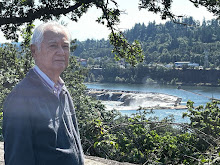
David B. Katague is an online memoirist and cultural essayist whose writing has appeared on HubPages

Tuesday, November 10, 2015

15. Places in the US that Macrine and I had Visited-Sequoia/King's Canyon National Parks and Fresno, California

General Sherman Tree

In the mid 1970's, while still residing in Modesto, the David Katague Family visited Sequoia and the adjacent King's Canyon National Parks. We saw the giant trees including the General Sherman tree- the largest tree on Earth. On our way back we stopped in downtown Fresno to tour the Forestier Underground Gardens. I enjoyed this tour very much since I am an avid gardener. If you have not visited Sequoia and Kings Canyon National Park and you live in the Central Valley of California, you are missing some wonders of nature and I suggest put it in your schedule on your next summer vacation.

Sequoia National Park is a national park in the southern Sierra Nevada, east of Visalia, California, in the United States of America. It was established on September 25, 1890. The park spans 404,051 acres (1,635 km2). Encompassing a vertical relief of nearly 13,000 feet (4,000 m), the park contains among its natural resources the highest point in the contiguous 48 United States, Mount Whitney, at 14,505 feet (4,421 m) above sea level. The park is south of and contiguous with Kings Canyon National Park; the two are administered by the National Park Service together.

The park is famous for its Giant Sequoia trees, including the General Sherman tree, the largest tree on Earth. The General Sherman tree grows in the Giant Forest, which contains five out of the ten largest trees in the world, in terms of wood volume. The Giant Forest is connected by the park's Generals Highway to Kings Canyon National Park's General Grant Grove, home to the General Grant tree among other sequoias. The park's Giant Sequoia forests are part of 202,430 acres (81,921 ha) of old-growth forests shared by Sequoia and Kings Canyon National Parks. Indeed, the parks preserve a landscape that still resembles the southern Sierra Nevada before Euro-American settlement.

Kings Canyon National Park is a U.S. National Park in the southern Sierra Nevada, east of Fresno, California. The park was established in 1940 and covers 462,901 acres (187,329 ha). It incorporated General Grant National Park, established in 1890 to protect the General Grant Grove of Giant Sequoias. The park is north of and contiguous with the Sequoia National Park


Forestiere Underground Gardens in Fresno

FORESTIERE patterned his underground world after the ancient catacombs of his native land. The Roman arches dominate the underground landscape while the stonework provides stability and beauty. But unlike the dark catacombs that protected the remnants of the lifeless, Forestiere designed well-lit courtyards and grottos to bring forth the radiance and vitality of life. This network of rooms, grottos, and passageways once honeycombed almost 10 acres, and numbered nearly 100.

FORESTIERE preferred his cool underground lifestyle to that lived by most people of his time—above ground in hot, wooden, “sweat boxes.” His unique home included a parlor with fireplace, a summer and a winter bedroom, a courtyard with a bath and a fish pond, and a kitchen with all the conveniences of his era. This earthen home was
his friend and protector from all types of inclement weather.

Amazing Underground Sights and Wonders

It has been said that “Beauty is in the eyes of the beholder.” Every twist and turn throughout this delightful underground maze brings a new beauty to behold. The stonework, the scallop-shaped seats carved into the walls and passageways, and the lush greenery of trees/ grapevines growing beneath the ground proclaim Forestiere’s
love for life, nature, and the divine Creator of it all.

ESCAPING the intense Fresno heat is as easy as descending a flight of stairs. Step down into the cool, welcoming arms of nature-shaded rooms and courtyards. Amazingly, the underground climates here (micro-climates) change depending on the location. Temperatures can range anywhere from 10 to 20 degrees from above ground, or just a couple of degrees from one spot to another. This photo shows a citrus tree (once bearing 7 varieties of citrus) growing at a second underground level (about 22 feet down). The different levels also affect the timing of tree blossom appearance and protect them from frost.

Note: This is No.15 ( Part 1) of a series of articles on places that the Katague family had visited or resided in US since 1960.

Friday, November 6, 2015

14. Places in the US that Macrine and I had Visited-Hihgway 1 from San Francisco to Mendocino, California

The Rugged Mendocino Coast
In the late 1980's Macrine and I (no kids this time) drove Highway 1 from San Francisco to Mendocino just for one time to celebrate a wedding anniversary. On our way we stopped at St Orres in Gualala along Highway 1 for lunch. We stayed overnight at the Victorian Mendocino Hotel that was constructed in 1878 and restored in 1975. The Hotel had 51 deluxe accommodations. It is luxurious, and romantic. There are garden suites and cottages situated on two acres of botanical gardens with fireplaces. Italian marble vanities, private balconies and spectacular ocean or garden views are featured in some rooms. Antiques, fine art, down comforters, stained glass and Oriental carpets, are some of the luxuries provided by the Hotel.
St Orres at Gualala, California
St. Orres is a combination 4-star restaurant with dramatic dining room setting, lodge, and series of cottages located on the Mendocino coast about 3 hours north of San Francisco.
Stinson Beach Near Muir Woods
I loved to drive the kids and Macrine to Point Reyes National Park almost once a month during the summer months. We purchased fresh oysters at Point Reyes and swam in Stinson Beach and Bolinas Bay (away from the Nude Beach because we have small children at that time). We also drove around the Muir Woods National Park, Mt Tamalpais and around Marin County and back to Pinole, Contra Costa County where we resided.
Muir Woods National Park
We ate lunch at Sausalito and Tiburon every now then. We went to Bodega Bay a couple of times just for sight seeing. We drove to Santa Rosa, Guerneville, Napa, Geyservile, Glenn Ellen and surrounding areas. I was young and adventurous at that time and I really did not mind driving just for sightseeing. The kids love it. Today, I hate to drive especially at night. What 40 years of time passing by can do to the human body and spirit.
Point Reyes National Seashores

Note: This is No.14 of 30 articles on the places that the Katague Family had visited or resided in US since 1960.

Tuesday, November 3, 2015

13, Places in the US that Macrine and I had Visited-Santa Cruz/Monterey, California and Surrounding Areas

Lone Cypress Tree in Monterey-the most photographed tree in California
We have been to Santa Cruz, Carmel and Monterey vicinity a couple of times in the early 1980's. We visited the Santa Cruz Board walk, the Monterey aquarium, Cannery Row and the 17 mile drive in Carmel on scenic route Highway 1. A winding road that leads through an exclusive neighborhood and past scenic coastal views to the famed Pebble Beach, the 17-Mile Drive is one experience the Katague family will not forget. Our leisurely drive on the Pacific Coast Highway from Monterey to Los Angeles that took us two days is one experience that we will never forget.
Here's a short review about the 17-mile drive from a satisfied tourist.
Visiting 17-Mile Drive-A must for Visitors
The 17-Mile Drive is fundamentally a road that passes through an exclusive neighborhood. You'll pay a fee (per car) to drive on it and motorcycles are not allowed. Despite what you may read elsewhere, the drive from the Highway 1 Gate to the Carmel Gate is approximately 17 miles. If you enter and/or leave through different gates, the distance may be different.
Once you get inside, you'll find signs and red-painted dashed lines on the pavement to help you follow the 17-Mile Drive route. The road winds through a forested area and along the oceanfront, passing three golf courses, two luxury hotels and the famed Lone Cypress tree. The guide map you get at the gate will give a brief description of each point of interest.
One of the scenic stops along the coastal route in the Monterey Bay Area
If you want to picnic along the 17-Mile Drive, stop at the Safeway store at the intersection of Highway 1 and Rio Road to pick up supplies or try the 5th Avenue Deli (between San Carlos & Dolores) in downtown Carmel. You can also buy picnic goodies along the drive at the Pebble Beach Market next to The Lodge at Pebble Beach. Best picnic spots are between Point Joe and Seal Rock and you'll find picnic tables at many stops. Local seagulls roost on the tables when no one is around, so you may want to bring something to spread over the table before you eat.
Even though it's written on the bottom of the 17-Mile Drive entry fee receipt, it's a little-known fact that you can get a refund. If you spend more than $25 at any of the Pebble Beach Company restaurants along the 17-Mile Drive, they'll deduct the fee from your bill. We recommend Roy's restaurant at the Inn at Spanish Bay for their great views and service. Their prices are also much more reasonable than the Lodge at Pebble Beach, and after the fee was subtracted, our lunch bill was only a few dollars more than a mediocre breakfast we had in Carmel the previous day.
Here's some of Monterey's county tourist destinations for you to consider.
"Visit Monterey and see the amazing Monterey Bay Aquarium, as well as Fisherman's Wharf and Cannery Row, made famous by Nobel Prize-winning Salinas writer John Steinbeck. Experience the legendary golf courses of Pebble Beach. Take a California wine country vacation in Carmel Valley, Soledad or Salinas Valley, or go art gallery hopping in beautiful Carmel-by-the-Sea or buzzing Sand City. For an outdoor experience, hike the wild trails of Big Sur, go surfing in Moss Landing, or watch the hang gliders in Marina and Seaside. Dine in centrally located Del Rey Oaks, and relax in an old-fashioned, seaside home town among the Victorian cottages and Monarch butterflies of Pacific Grove. Monterey County is your destination for a perfect California vacation".

With regards to Santa Cruz ,the board walk is too touristy, but fireworks on the beach during July 4th is fun if you do not mind the crowds.
Fireworks at Santa Cruz Beach
Scenic Pacific Coast Highway Drive
My wife and I have driven scenic California Highway 1 from San Francisco to Los Angeles with a stop at San Luis Obispo and the Hearst Castle. This experience offered us, the best American coastal scenery in our life time.
Some of California's best views lie along the coast road between San Francisco and Los Angeles. The most dramatic scenery is on the stretch between Carmel and San Simeon.
The Pacific Coast Highway – officially designated California Highway 1 – is a favorite route for visitors exploring the state. The 485 miles between San Francisco and Los Angeles is one of the country's best scenic drives. A minimum of two days is needed to see a few of the attractions and allow for plenty of stops to admire the beautiful views along the Pacific Coast Highway.
The coastal scenery is most dramatic on the stretch between Carmel and San Simeon. Here are the highlights of this central section of the Pacific Coast Highway drive.
Along the Pacific Coast Highway(Photo from Sister Guia Jambalos). How Lovely is your dwelling place O Lord, Our God!
1.Carmel-by-the-Sea: The actor Clint Eastwood once served a term as mayor of this purposely quaint town 4 miles south of Monterey. It has a beautiful setting on the headlands of Carmel Bay, sloping gently down to the ocean shore. In order to preserve its character, city ordinances forbid such things as parking meters, streetlamps, franchise restaurants and even postal deliveries. The result is a picturesque – and wealthy – town with designer shops and numerous art galleries. Among the best is the Weston Gallery on Sixth Street, with works by famous photographers such as Ansel Adams and Edward Weston, a former resident. At the end of Ocean Avenue, Carmel Beach is a peaceful spot with beautiful white sand backed by pine-covered cliffs. Further along, Carmel River State Beach has a lagoon and nature preserve harboring many bird species. At both beaches, strong tides and dangerous currents make swimming hazardous. Sea otters and sea lions can be spotted at Point Lobos State Reserve, 2 miles south. The point is also a good place to see migrating California gray whales, especially in January, April and the beginning of May.
2. Carmel Mission: Slightly inland along the river, this was the second in the chain of California missions. Established in 1770, it served as the headquarters for Northern California. Father Junípero Serra, founder of the missions, is buried at the foot of the altar. The mission has been carefully restored to its original plan. The church features an ornate Gothic arch behind the altar, while reconstructed rooms such as the kitchen and Father Serra's simple cell depict mission life.
3.Big Sur: The 100-mile stretch of coast known as Big Sur is the highlight of the Pacific Coast Highway. Here, Highway 1 runs dramatically along a narrow, winding route carved out of the cliffs, high above the sea. Below are rocky coves and crashing waves; inland are steep mountains, canyons and dense forests. Bixby Creek Bridge, 260 feet high and 700 feet long, was the world's largest single-arch span for many years after its construction in 1932.
Few people live in this rugged region. The town of Big Sur is really just a long string of restaurants, grocery stores and gas stations. A cluster of restaurants and shops surround the resort of Nepenthe, tucked away behind oak trees. Most of the coastline is protected in several state parks, which offer hiking trails, campsites, wilderness areas and access to sandy beaches and rocky shores. These include Andrew Molera State Park, Pfeiffer Big Sur State Park, Julia Pfeiffer Burns State Park and Jade Cove.

Note: This is No.13 of 30 articles on places that the David B. Katague family have either resided or visited in US since 1960. No. 14 will be our trip from San Francisco to Mendocino passing through Point Reyes National Park and Bodega Bay.

Sunday, November 1, 2015

12. Places in the US that Macrine and I had Visited-San Diego, California and Vicinity

San Diego Skyline

We have visited San Diego three times since 1960. It is one of my favorite California cities, because the climate reminds me of the Philippines. A friend grows bananas, guavas and avocados in his backyard. It is not only a nice city to visit but also to live and retire if you could afford the housing in the area.

Three of our family favorite places in the San Diego area are the Zoo, Legoland and Sea World. It is also a convenient starting place to visit Tijuana, Mexico. Be careful if you decide to visit Tijuana, Mexico for pickpockets etc. We love San Diego and will never get tired of the city.

The Zoo

The Coronado Bridge

Here's a short video of the sites and sounds of this beautiful city.


Note: This No. 12 of 30 articles on the places that the Katague family had either visited or resided in the US since 1960.

Friday, October 30, 2015

Chapter 8: The Ancestral Roots of the Nieva Clan of Marinduque-The Magnificent Six

Continuation of Series authored by Rene Nieva
THE MAGNIFICENT SIX NIEVAS OF GENERATION I: The Founding Father of the Nieva Clan of Marinduque -- from whom all the subsequent Nieva descendants to the present all came from whether surnamed Nieva or not -- was Calixto Nieva. Calixto
was Cabeza or Governadorcillo of Boac in 1867. He came from a line of Gobernadorcillos himself.

Calixto's wife was Epifania, also known as Capitana Maning. She was known for her mestiza beauty, being the daughter of a parish priest of Boac of Spanish-French descent. Thus, the good looks of most if not all of the subsequent Nievas likely came mainly from Epifania or the Morente side. Nonetheless, Calixto had a certain roguish handsomeness himself as may be seen from the attached photo.

Epifania must have not been just a pretty face but must have served as a supportive partner to Calixto. The leadership qualities of the Morentes seemed to have manifested themselves in her siblings, one of whom, Juan or Juancho, became governor of Mindoro, as well as subsequent generations of Morentes that have produced National Artist Lucrecia Kasilag, DOTC Undersecretary Josie Trinidad-Lichauco and an assortment of business and professional leaders.

Calixto and Epifania had six children, whom we can dub as belonging to Generation 1. They compose the six branches of original Nievas from whom the generations following can connect themselves even if they no longer carry the Nieva surname through their marriages. The six are, in the order of birth, Juan, Victoria, Dionisio, Gregorio, Jose and Rosita, who were all of course surnamed Nievas. I would like to refer to them as the Magnificent Six, for they all were extraordinary and impressive men and women who have made indelible marks not only in the history of Marinduque but that of the nation as a whole.

The first and oldest child was Juan, born in 1860, a contemporary of Jose Rizal who was his schoolmate (he called him Pepe) at the Liceo de Manila, forerunner of the Ateneo. He was a good friend of Manuel Luis Quezon, who was his provincemate (Tayabas and Marinduque were then one province). Juan even made Quezon godfather to his first-born son Guillermo (Willie).

Juan became Cabeza de Barangay of Boac and Sta. Cruz and lieutenant governor or "sub-governor" of the then sub-province (of Tayabas) of Marinduque from 1907 to 1916. He was credited for the planting of coconut trees throughout Marinduque and connecting all the towns through telegraphic lines.

From Juan descended not just the Nievas but also the Jambaloses, the Carrions, the Luarcas, the Senos, the Sto. Domingos and the Ocampos of Generation 2 and other surnames in succeeding generations.

Victoria was the political right-hand woman of Juan. Even if she was lame (from falling from a calesa) she was an astute and dynamic politician and was said to be the "king-maker" behind the political successes of Juan and other political leaders of Marinduque at the time.

Victoria (no photo available) was also active in civic and charitable affairs, putting up and becoming the first president of the Boac Puericulture Center which looked after the health of mothers and their babies. Victoria married Doroteo Mercader and from her and her husband came the Reyeses, the Sto. Domingos and the Laurels of Generation 2 and 3 and again other surnames in succeeding generations.

(Next, the rest of the Magnificent Six -- Dionisio, Gregorio, Jose and Rosita.)

Thursday, October 29, 2015

11. Places in the US that Macrine and I had Visited-San Luis Obispo, California and the Hearst Castle


Macrine and I had been to the Hearst Castle in San Simeon twice in the late 1970's. There are five tours one can take, but if it is your first time, Tour #1 is highly recommended by the National State Park officials. It is about 41 miles from San Luis Obispo, where most tourist stay overnight to return the next day for another tour.
The Garden

Hearst Castle is a National Historic Landmark mansion located on the Central Coast of California, United States. It was designed by architect Julia Morgan between 1919 and 1947 for newspaper magnate William Randolph Hearst, who died in 1951. In 1957, the Hearst Corporation donated the property to the state of California. Since that time it has been maintained as a state historic park where the estate, and its considerable collection of art and antiques, is open for public tours. Despite its location far from any urban center, the site attracts roughly one million visitors per year.


Hearst formally named the estate "La Cuesta Encantada" ("The Enchanted Hill"), but usually called it "the ranch". The castle and grounds are also sometimes referred to as "San Simeon" without distinguishing between the Hearst property and the adjacent unincorporated area of the same name. The history of this castle is fascinating and interesting. For details read the Wikipedia.
The Pool-edged with Gold

Now for information about San Luis Opispo, just recently listed as one of the top ten and best cities to live in the United States.

San Luis Obispo (pronounced /sæn ˈluːɪs ɵˈbɪspoʊ/; Spanish for St. Louis, the Bishop) is a city in California, located midway between San Francisco and Los Angeles on the Central Coast. Founded in 1772, San Luis Obispo is one of California’s oldest communities. The city, referred to locally as "SLO", "SLOtown", "S.L.O" and "San Luis", is the county seat of San Luis Obispo County and is home to the California Polytechnic State University (Cal Poly).

One of Macrine's nephew graduated from Cal Poly in the late 1980's. This Fall, my granddaughter Marina Katague entered as a Freshman at Cal Poly.

The City in 1876
Earliest human inhabitants of the local area were the Chumash peoples, who settled in the vicinity circa 5,000 to 10,000 years BC. One of the earliest villages lies south of San Luis Obispo, and reflects the landscape of the early Holocene when estuaries came farther inland and sea levels were higher. These Chumash people exploited marine resources of the inlets and bays along the Central Coast and inhabited a network of villages including sites at Los Osos and Morro Creek.

San Luis Obispo once had a burgeoning Chinatown in the vicinity of Palm St. and Chorro St. Laborers were brought from China by Ah Louis in order to construct the Pacific Coast Railway, roads connecting San Luis Obispo to Paso Robles and Paso Robles to Cambria, and also the 1884 to 1894 tunneling through Cuesta Ridge for the Southern Pacific Railroad. SLO's Chinatown revolved around Ah Louis Store and other Palm Street businesses owned and run by Chinese business people. Today, Mee Heng Low chop suey shop is all that remains of the culture, although a revitalized Chinatown development is being planned. A display of some of the unearthed relics from this period can be seen on the first floor of the Palm Street parking garage, which was built over the location where Chinatown once stood. The San Luis Obispo Historical Society (adjacent to the Mission) also contains rotating historical exhibits.

Among San Luis Obispo's historical buildings is the former San Luis Obispo Carnegie Library, located at 696 Monterey Street. The San Luis Obispo Carnegie Library was built in 1905 with a grant of $10,000 from Andrew Carnegie, who funded the establishment of 142 California libraries in the early 1900s. The Romanesque style building was designed by architect W.H.Weeks of Watsonville, California and was built by contractor Joseph Maino of San Luis Obispo. As one of numerous California public buildings designed by W. H. Weeks, it shares features with Carnegie libraries in nearby Lompoc and Paso Robles.

The San Luis Obispo Carnegie building served as the city library until 1955, when a new public library was built at the corner of Palm and Morro Streets. It has been home to the San Luis Obispo County Historical Museum since 1956. The Carnegie Library building is listed on the National Register of Historic Places.


Note: This is no. 11 of 30 ( Part 1) articles on places that the Katague family had visited or resided in the US since 1960.

Monday, October 26, 2015

10. Places in the US that Macrine and I had Visited-Los Angeles, California and Surrounding Areas

Macrine and I at the Huntington Beach Pier, 2010

We have been to the Los Angeles area more than a dozen times since 1960. Like New York, my personal opinion is that it is a nice place to visit, but even if you gave me a million dollars, I will never live in the area. Why? the Smog, the overcrowded freeways and just too many people. But as far as tourist attractions, the area is one of the best in US with Disneyland, Catalina Island and the surrounding beaches such as Huntington Beach, Santa Monica and of course Hollywood and Beverly Hills.

Even in the most remote corners of the world, the name Los Angeles is known. As one of the most popular cities in this country, LA draws millions of tourists every year, catering to the unique desires of each one with unparalleled diversity and countless entertainment options. There truly is something for everyone around this city.

Take a tour through the world of the rich and famous in Beverly Hills, find the classic California surfing lifestyle at Huntington Beach, or follow the White Rabbit down the rabbit hole into the funky and eclectic world of Venice Beach. Appease your inner child by visiting attractions like Disneyland and Magic Mountain, or summon your inner performer by visiting Universal Studios and the Hollywood Walk of Fame. While picking the right destination for activities may be difficult, one sure thing is that there will never be a lack of options. Los Angeles is almost synonymous to Disneyland in Anaheim. We have visited Disneyland three times since 1960. It is a must see for both adults and children of all ages. Here are two short videos for your enjoyment.


Here are a few suggested tours besides Disneyland for you to consider if you happened to be in the LA area.

Newport Landing Whale Watching
1. One of the most unique ways to spend any day is by taking to the sea to watch whales and dolphins in their sparkling natural habitat. Newport Landing offers multiple whale watching tours departing daily, year-round, from Newport Beach, and individuals, groups and school classes are welcome to enjoy this breathtaking experience. Gray whales, giant blue whales (the largest animal on the planet), finback whales, and several other species of whales, 6 different species of dolphin, sea lions, and more are all viewable from their large specially made for whale watching ship.

2. Escapes Sightseeing and Food Tours
See famous sites in Hollywood and dine at the hottest restaurants. All this can now be accomplished with TOURific Escapes' Hollywood Sites & Bites Tour. The four-hour tour kicks off at iconic landmarks around Hollywood. Experience major attractions like the famous Hollywood Sign, Hollywood Roosevelt Hotel, Grauman's Chinese Theatre and the site of the Academy Awards. Next up is a trip down Hollywood Boulevard, swinging by trendy Melrose and down The Sunset Strip, probably LA’s most famous attraction. Along the way, you’ll dine at some of LA’s best restaurants. Some are hidden gems known only to Foodies and locals. Don’t miss this TOURific adventure.

Another Side of Los Angeles Tours
3.Whether you're visiting Los Angeles or you're a local, Another Side of Los Angeles Tours is a great way to see all the sites that LA has to offer and in a very unique way. This LA tour provider is famous for their Segway Tours covering the best spots around LA including Beverly Hills--probably the most popular tour--and Another Side of Los Angeles Tours also offers studio tours, golfing tours, shopping and LA spa tours along with general sightseeing tours. For the ultimate Los Angeles experience, try the Ultimate Hollywood Tour which cruises through Beverly Hills, Rodeo Drive, the Farmers Market, swings by Hollywood Mann's Chinese Theatre, takes a stroll on the Walk of Fame, rolls down Sunset Strip, drives through the Avenue of the Stars, and checks out amazing Hollywood homes.

Cruise Newport Beach
4. Whether visiting Los Angeles or living there, a cruise exploring the beautiful waters of Southern California is a treat for anyone. Cruise Newport Beach offers affordable sunset cruises and brunch cruises, as well as evening cruises and Latin themed cruises complete with margaritas and live Latin music. This Los Angeles cruise company also offers ship rentals for events like bachelor parties, company parties or holiday gatherings.

Go Los Angeles Card
5.The Go Los Angeles Card offers free general admission to over 35 Los Angeles attractions, including Universal Studios Hollywood, the Los Angeles Zoo, California Science Center, Los Angeles City Tour, LEGOLAND California, and the Hollywood Wax Museum.

Note: This is No.10 ( Part 1) of a series of articles on places that the Katague family have either resided or visited in the US.
Related Posts Plugin for WordPress, Blogger...