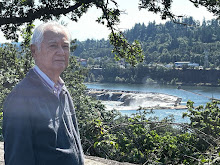
This is a new site highlighting my autobiography with my name David B Katague spelled backwards. The photo above is Chateau Du Mer Beach House in Boac, Marinduque, Philippines. Photo taken in the Spring of 2012.
David B. Katague is an online memoirist and cultural essayist whose writing has appeared on HubPages
Friday, October 18, 2024
Pre-Colonial Philippines- The Kingdom of Tondo ( Manila)
Thursday, October 17, 2024
Intramuros-The Walled City in Manila
MANILA, Philippines — The public is urged to cast votes for Intramuros to win the World’s Leading Tourist Attraction award for the second time in the World Travel Awards 2024.
The historic Walled City is competing with 21 destinations around the world, including Ha Long Bay in neighboring Vietnam. In Asia, Intramuros’ opponents are the Burj Khalifa in Dubai, Ferrari World in Abu Dhabi, Warner Bros. World and IMG Worlds of Adventure in the United Arab Emirates, the Great Wall of China, the Taj Mahal in India and the teamLab Planets TOKYO DMM in Japan.
Other competitors for the award include the Dark Sky Alqueva in Portugal, Grand Canyon National Park in the US, Guinness Storehouse in Ireland, Las Vegas Strip in the US, Machu Picchu in Peru, Magic Kingdom Park in the Walt Disney World Resort in the US, Mount Kilimanjaro in Tanzania, Ngorongoro Conservation Area in Tanzania, Niagara Falls in Canada, SUMMIT One Vanderbilt in the US, Table Mountain in South Africa, the Acropolis of Athens in Greece and Ayers Rock Resort in Uluru, Australia.
The Manila Cathedral at Night in Intramural, the Walled City. Manila, Philippines
Intramuros, also known as the Walled City, has stood for centuries. The city was built in the late 16th century as the city that held the seat of power in Manila. The walls were constructed to fend of any possible foreign attacks since the governor assigned to the Philippines also resided and held office there. For Life Inside the Walls visit the following site:
Lastly, here are the most popular architectural style for your information!
Wednesday, October 16, 2024
The Archaeological Site in Bolinao, Pangasinan
In the picturesque coastal town of Balingasay Archaeological Site in Bolinao, Pangasinan, Archaeologists unearthed a treasure that would rewrite our understanding of ancient Filipino culture. The Bolinao Skull, discovered alongside 67 other skulls and Ming Dynasty ceramics, dates back to the 14th or 15th century AD. But what makes this particular skull stand out is its dazzling secret.As researchers carefully examined the skull, they were stunned to find intricate gold dental ornamentation adorning its teeth. Delicate gold flecks, arranged in a fish-scale pattern, decorated both the upper and lower teeth. This wasn’t just any dental work – it was a masterpiece of ancient craftsmanship, with gold disks, plugs, pegs, and wire meticulously inserted into drilled holes in the teeth.
Other well known sites in the Philippines are the Rizal Archaeological Site in Kalinga, Tabon Caves, Lapuz Lapuz Cave, and Singhapala. Additionally, some famous artifacts found in the Philippines are the Callao Man, Tabon Man, Kabayan Mummies of Benguet.
https://www.southeastasianarchaeology.com/2022/11/22/tantingco-big-archaeological-site-in-porac/
Meanwhile here are the top 10 scariest archaeological discoveries ever :
Tuesday, October 15, 2024
The Manila Galleon Trade
This is the fifth article on my blog series about the Philippines in connection with the celebration of Filipino-American History Month.
The Manila galleon (Spanish: Galeón de Manila; Filipino: Galyon ng Maynila) refers to the Spanish trading ships that linked the Philippines in the Spanish East Indies to Mexico (New Spain), across the Pacific Ocean. The ships made one or two round-trip voyages per year between the ports of Manila and Acapulco from the late 16th to early 19th century.
The term "Manila galleon" can also refer to the trade route itself between Manila and Acapulco that was operational from 1565 to 1815.
The Manila galleon trade route was inaugurated in 1565 after the Augustinian friar and navigator Andrés de Urdaneta pioneered the tornaviaje or return route from the Philippines to Mexico. Urdaneta and Alonso de Arellano made the first successful round trips that year, by taking advantage of the Kuroshio Current.
The galleons set sail from Cavite, in Manila Bay, at the end of June or the first week of July, sailing through the northern Pacific and reaching Acapulco in March to April of the next calendar year. The return route from Acapulco passes through lower latitudes closer to the equator, stopping over in the Marianas, then sailing onwards through the San Bernardino Strait off Cape Espiritu Santo in Samar and then to Manila Bay and anchoring again off Cavite by June or July.
The trade using "Urdaneta's route" lasted until 1815, when the Mexican War of Independence broke out. The majority of these galleons were built and loaded in shipyards in Cavite, utilizing native hardwoods like the Philippine teak, with sails produced in Ilocos, and with the rigging and cordage made from salt-resistant Manila hemp.
The vast majority of the galleon's crew consisted of Filipino natives; many of whom were farmers, street children, or vagrants press-ganged into service as sailors. The officers and other skilled crew were usually Spaniards (a high percentage of whom were of Basque descent). The galleons were state vessels and thus the cost of their construction and upkeep was borne by the Spanish Crown.[3][4]
The galleons mostly carried cargoes of Chinese and other Asian luxury goods in exchange for New World silver. Silver prices in Asia were substantially higher than in America, leading to an arbitrage opportunity for the Manila galleon. Every space of the galleons were packed tightly with cargo, even spaces outside the holds like the decks, cabins, and magazines. In extreme cases, they towed barges filled with more goods. While this resulted in slow passage (that sometimes resulted in shipwrecks or turning back), the profit margins were so high that it was commonly practiced.
These goods included Indian ivory and precious stones, Chinese silk and porcelain, clovesfrom the Moluccas islands, cinnamon, ginger, lacquers, tapestries and perfumes from all over Asia. In addition, slaves (collectively known as "chinos") from various parts of Asia (mainly slaves bought from the Portuguese slave markets and Muslim captives from the Spanish–Moro conflict) were also transported from the Manila slave marketsto Mexico.
Free indigenous Filipinos also migrated to Mexico via the galleons (including galleon crew that jumped ship), comprising the majority of free Asian settlers ("chinos libres") in Mexico, particularly in regions near the terminal ports of the Manila galleons. The route also fostered cultural exchanges that shaped the identities and the culture of the countries involved.
The Manila galleons were also known colloquially in New Spain as La Nao de China ("The China Ship"), because they carried mostly Chinese goods shipped from Manila. The Manila Galleon route was an early instance of globalization, representing a trade route from Asia that crossed to the Americas, thereby connecting all the world's continents in global silver trade.
In 2015, the Philippines and Mexico began preparations for the nomination of the Manila–Acapulco Galleon Trade Route in the UNESCO World Heritage List with backing from Spain, which has also suggested the tri-national nomination of the archives on the Manila–Acapulco Galleons in the UNESCO Memory of the World Register.
Meanwhile: Did you know that Surigao is famous for its rich gold deposits, earning it the title of one of the Philippines' top gold-producing regions?
Monday, October 14, 2024
Pre-Colonial Filipino Literacy and Writing Systems
with the San Francisco Golden Gate in the background.
Sunday, October 13, 2024
Welcome, Autumn is Here at THD
The cool and lazy morning of Autumn is here at THD. This week autumn weather has reached the East Bay. I am delighted for the change from three digits to perfect temperatures ranging from the low 60's in the morning and later to the low 80's in the afternoon. Here are some photos, I took this morning.
The photo with the bougainvillea blooms I took early in the morning when it was a little bit foggy, but later cleared when I took the photo of my cacti collection.
The photos above are my bougainvillea and cacti blooming and happy of the cool temperatures in the morning.
Even Batman and Robin are getting lazy and started napping after their breakfast as shown in the following photos.
Yesterday Batman was watching me doing my daily blogs setting at the top of my printer. However, was Robin was outside hiding by the side of my garbage pail.
Lastly, enjoy this Poem -The Raven, by Edgar Allan Poe.
Saturday, October 12, 2024
Spanish Influence and Heritage tp Philippines Architecture
Note: I have received numerous positive comments from several non-Filipino readers of my blog. They informed me they learned a lot about the Philippines and encourage me to continue writings about Philippine history, culture and traditions and current news about the Philippines. I promised I will do it to the best of my ability. Thank you all for your encouraging comments.


